Every Day Strong – Combating Anxiety and Depression by Building Resilience

Every other year children in Utah schools are given a survey that asks: During the past 12 months, did you ever feel so sad or hopeless almost every day for two weeks or more in a row that you stopped doing some usual activities? In 2011, 13% of youth responded yes, but when the survey was repeated in 2017 that number had risen to 25%. (Utah County Student Health and Risk Protection (SHARP) survey data.)

While not all of these children who answered yes would meet the criteria needed to diagnose a Depression or an Anxiety Disorder, this trend illustrates the increasing challenge our children are facing. Frequently I’m asked if the causes of this increase are known. While there are many theories about contributing factors, such as the use of smartphones, living at elevation, changes in family structure, helicopter parenting, and social media, none of them fully capture what is going on, and more importantly, they do not provide any guidance on what parents should do for those kids who are suffering.

To address this, the United Way created a program called Everyday Strong, which focuses on building resilience in kids to help them combat anxiety and depression. This is achieved by focusing on our physical needs, our need for safety and our need for connection, which when met, allows us to feel confident and hopefully thrive in life.

Below is a brief discussion of these concepts, but for more details and ideas you can read through the EveryDay Strong Handbook, attend a live presentation, or watch a recorded presentation here.
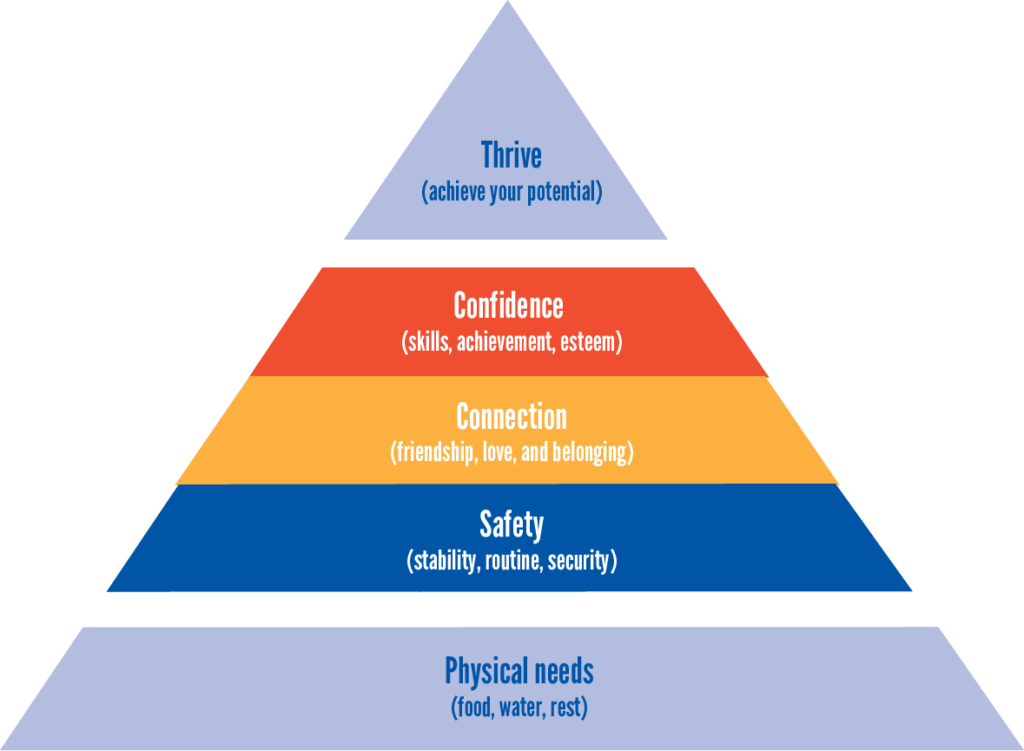
At the most basic level, we all have physical needs that must be met. Examples include sleep, food, water and rest.  We all know that person who becomes “Hangry”, but once you give them a little food, they return to a more productive version of themselves. When I was on Active Duty in the Navy, I learned that when marines, soldiers, sailors or airmen had experienced combat stress, the most effective intervention is “3 Hots and a Cot”, or in other words three hot meals, a chance to get good sleep, with a plan to return to their unit as soon as possible.

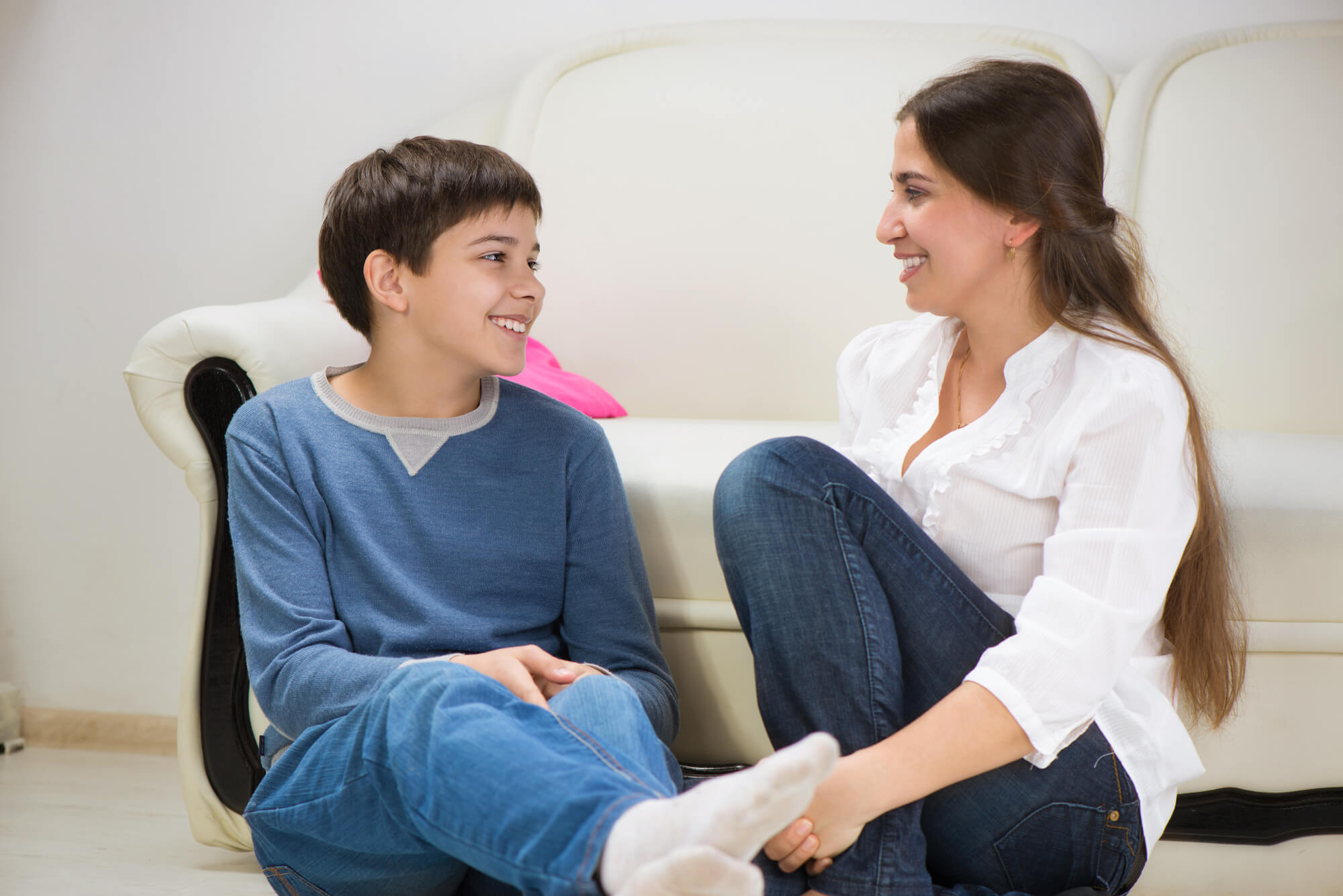
Once our most basic needs are met, we need a place to feel both physically and emotionally safe. As parents, we can focus on creating an environment where it is safe to talk, safe to feel emotions, safe to explore, and safe to fail. Because even if a child is safe, they may not feel it. It’s better to listen more than you speak while withholding judgment about what they are feeling and discuss failure as a chance to grow. This is easy to say, but much harder to do.

As you strive to create a safe environment, this should lead to opportunities for you to connect with your child. One of the most common complaints of teens experiencing anxiety and depression is feeling alone even when they are surrounded by people. You can connect by playing together, laughing together, learning about their interests even if you think they are boring, and apologizing to your child when you’ve done something wrong. Sometimes this is easy when you and your child share similar interests, but other times it is a real stretch. For example, what if they love playing the video game Fortnite or enjoy being in theatre, (things that don’t necessarily appeal to you)? Taking time to learn the basics, even making a fool of yourself by participating can go a long way to making that connection. Every child is unique and taking time to find that uniqueness is what brings about connection.

Ultimately, it is impossible to make someone else feel confident, but there are things you can do to encourage your child to find confidence. Some examples include trusting your child’s ability to solve problems, role-playing solutions, and remember when they have been successful. One specific tool that can help when dealing with Anxiety and Depression is naming the problem the child is facing. If every time a child is about to go to school they get overwhelmed worrying about all the things that can go wrong, you can start a conversation that what they are feeling is Anxiety. At times, giving this feeling of anxiety a specific name such as the “Bossy Pants” or “Stinky Head” helps externalize what they are feeling and allows them to get back in charge.

As you meet a child’s basic needs, help them feel safe, create meaningful connections, and build confidence, your child will have an opportunity to thrive.

The information provided by the United Way is not meant to replace professional mental health care. If you feel like your child’s needs surpass the given advice, please make an appointment with one of the Pediatricians at Canyon View Pediatrics.

https://www.unitedwayuc.org/images/pdfs-doc/UnitedWay_ResilienceHandBook_Web.pdf

Be Present – Mindfulness for the Whole Family

Almost two years ago, my maternal grandmother passed away. We called her “MomMom” because she didn’t like the title “Grandma.” She was one of the kindest and loving people I have ever known. Our greetings were always the same. She would place her hands on my cheeks, look into my eyes for a couple of seconds, and then ask how I was doing. She did this with all of her many grandchildren and great-grandchildren. We all knew that the question of how we were doing was unnecessary because she could tell as she looked into our eyes. There was no hiding anything from MomMom. She would then listen intently as we talked about the details of our lives, with her focus firmly fixed on each of us, one at a time. There were no distractions, no interruptions. We all knew she loved us individually because of the time and attention she gave each one.

I realize now that what she exhibited was a combination of many current buzzwords in today’s psychology literature – being present, living in the moment, reciprocal conversation, reflective listening. But what she demonstrated most of all was the ability to be mindful, intently focusing on the current moment, and making the most of it. Looking back, I find this quality among the most endearing of the many she possessed.

Mindfulness is defined in the psychology world as: “a technique in which one focuses one’s full attention only on the present, experiencing thoughts, feelings, and sensations but not judging them.” (Dictionary.com) The benefits of mindfulness include greater peace and contentment, lower levels of negative stress, and greater enjoyment of activities.

My topic in this article might be considered mindfulness with a twist. Traditional mindfulness focuses primarily on the self. But the principles of mindfulness can be applied outwardly as well, particularly with regard to those closest to us. Within families, mindfulness can strengthen relationships and increase feelings of closeness and appreciation for each other. This can happen as we “focus our full attention only on the present” interaction we’re having with a child or spouse. So what may prevent this from happening?

The many distractors from mindfulness include the usual suspects: television, video games, computers, binge-watching Netflix or Prime, or obsessive pursuit of any activity, just to name a few. But probably the biggest culprit in today’s society, often robbing us of meaningful interpersonal interactions, is in our pockets (or hands) right now. The smartphone, with all of its uses, has become a giant time and attention vacuum. The interruptions caused by its frequent alerts would be considered rude and intolerable if they came from another person. Yet we happily stop whatever we are saying or doing to check our little attention monger whenever it chirps. We might tell our child that it’s rude to interrupt one minute, and then interrupt our own conversation to check our phone the next. I’m using the words “we” and “our” here intentionally… guilty as charged.

So what can we do to increase mindfulness in ourselves and our children? And how can we use this practice to improve our relationships? Practices such as “mindfulness of breathing,” meditation, guided imagery, etc., can certainly be helpful, and I do not discourage them. However, for the purposes of this article, I chose to focus on those aspects of mindfulness, like “being present,” which are more likely to be helpful with family relationships.

Take Advantage of Opportunities

There are likely many chances for meaningful interaction with our children in the course of the typical day. But are we taking full advantage of these? Car rides, doing chores together, playing games, going on walks, waiting for the doctor or dentist to come into the room (hopefully not too long!), can all be prime opportunities to exhibit genuine interest in our children and focus our attention on them. How many car rides, for instance, are spent in silence or listening to the radio, when real and needed conversation could be taking place? This time can be spent doing much more than going from one place to another. For young children, the more speech they hear the better for verbal development. For teens, the car may be the only place we have them as a captive audience!

The family dinner table is another great time and place to practice being present with our children. In some families, schedules don’t allow for everyone to be together for dinner. But whenever possible, consistently eating dinner together allows for so much more than just eating. It’s a great chance to catch up on events of the day or week and to reconnect for a few minutes. This time can prove invaluable for busy families if the principles of mindfulness are employed.

Create New Opportunities

Barbara Howard, MD, one of the preeminent behavioral pediatricians in the country, is a big proponent of a practice she terms “Special Time.” It can also be called other things such as “Mommy Time” or “Daddy Time” and should be consistently called the same thing within your family. It involves setting aside 10-15 minutes per day, or longer if time allows, to devote exclusively to each child. There should be no distractions or interruptions. The child chooses the activity, and almost anything goes, except for watching screens. If this is done every day, according to Dr. Howard, it becomes a symbol of our unconditional love for our child. Therefore, it should never be taken away as a punishment. This practice is clearly more applicable to younger children, but the concept is the same as teenagers, although more creativity will likely be required.

Put Down the Phone

We are likely all sick of hearing this, but there is no question that our phones interfere with interpersonal interactions. Here’s one example: The majority of people in my office spend their wait time on their phones (or other screens). I usually enter to find that the only sound in the room is coming from the video playing on the phone. On occasion, I will enter the room to find a parent and teen intently conversing, or a parent reading to a younger child or playing “I Spy” or some other fun game. These latter cases are time better spent.

I recently started trying to keep my phone out of my pocket when I’m at home. By leaving it on the counter or in the bedroom, I’ve been able to focus more on my family. It surprised me how often I reached for my phone. But when it wasn’t there, I realized I didn’t really need it. Any habit can be broken with consistent effort. With regard to teenagers, how can they be expected to regulate their own smartphone use if they see us constantly using ours? What was the definition of hypocrisy again?

Eye Contact

One of the most fundamental ways for people to connect with each other is through intentional eye contact. But within families, many become lazy or careless in the practice of this interpersonal necessity. It is courteous and respectful to make and maintain appropriate eye contact when conversing with someone. Yet how often do we extend this courtesy to our children? As parents, we will be better heard, understood, and appreciated if we make efforts to truly “see” our children by looking in their eyes as we address them. Some of us may even develop the special powers MomMom clearly possessed. This also serves as a form of modeling, helping our children learn important interpersonal skills from us, just as they should.

Expressions of Affection

If we are more present with and mindful of, our children, we will be more likely to express our love for them in both words and actions. When was the last time we looked at one of our children in the eye and meaningfully expressed love and gratitude for them? When was the most recent hug? When our children are younger, it’s often easier to do these things, and hopefully, good habits form. With teenagers, this can all be a little more difficult, for many reasons. However, their need for feelings of love and acceptance is at least as great as in the younger set. This can often break down walls and improve relationships in those who have grown apart. Mindfulness can help us as parents to take advantage of opportunities to tell and show our children how much they mean to us in ways that will not happen if we are too distracted or otherwise occupied.

In conclusion, it is my hope that this part of intentional parenting can benefit all of us as we raise our children in these challenging times. For some, like MomMom, these behaviors and practices come easily and seem natural. For others, I think most of us, a lot more work and effort may be required. Regardless of which group we find ourselves in, we can improve our ability to be mindful and present. Although the events and circumstances of life may not change dramatically, mindfulness increases satisfaction and meaning in everyday living, for ourselves and our children.

Never Too Young to Read

When parents come in with their young infants, I at some point ask if they are reading with their baby. Often times I get confused looks, “You mean I should be reading with them already?” It’s true that your 2-week old infant won’t really be paying attention to the book, they may not even be able to see the pictures, and definitely won’t understand a storyline, but they are interested in the sound of your voice and the loving attention that reading affords. Starting the habit of reading early can have a profound effect on a child’s developing brain, particularly in the areas of language development, focus, and attention.

Studies have shown that children who are exposed to reading books at home have stronger activation in the parts of their brain associated with language processing, comprehension, and imagination. These children also enter school with better language and literacy skills and tend to have stronger parent-child bonds when compared to children who are not read to on a routine basis. Given all of these factors, it should come as no surprise that we as pediatricians encourage reading at an early age. Additionally, The American Academy of Pediatrics, in a 2014 statement recommended that parents start reading with their infants starting shortly after birth.

Language acquisition is an important milestone during a child’s development. Over the first two years, your child’s comprehension and understanding of language really take off, while expressive communication lags behind. Studies have shown that toddlers who have been read to often have a larger vocabulary than those who have not been read to and may even start talking earlier. As your infant starts making vowel sounds with “coos” and “goos”, followed by consonant sounds and babbling with “bababa” and “mamama”, they are starting to understand the words and sentences that you are speaking to them. They engage in conversations with you, babbling away as you acknowledge their utterances and teach them the back and forth pattern of mature conversations. By the time they can utter 3 to 5 words, they may also be able to follow a simple command such as “wave bye-bye.” What you get with this discrepancy in learning pace is a toddler who can understand what she is hearing, but is unable to communicate her thoughts, wishes, and needs. Once a toddler is able to communicate more effectively with caretakers, they can start to interact with their environment and express their own thoughts.

Exposure to words is vital to both expressive and receptive language development in children. An intensive observational study published in 1995 by Betty Hart and Todd R Risley (The Early Catastrophe: The 30 Million Word Gap by Age 3, published by the American Federation of Teachers) demonstrated a large gap in the spoken vocabulary of 3 year old toddlers based on the number of words that their child heard daily during those first years. The researchers observed differences amongst three groups of children: those who heard 600 words per hour, those who heard 1250 words per hour, and those who heard 2100 words per hour. Children from the group who heard just 600 words per hour during those first few years spoke only about 600 words at age 3 compared to 750 words in children who heard 1250 words per hour and nearly 1200 words in children who heard 2100 words per hour. What’s more, is that ongoing observation found that the gap in a child’s spoken vocabulary only continued to widen as the children got older. Children who had a faster rate of learning new words performed better in elementary school, and had better language skills and reading comprehension by age 10. Based on the observations of the study, the authors hypothesized that a major contributor to this discrepancy was the number of words the child heard during the first 4 years of life. When the researchers extrapolated the words heard per hour over a 4 year period, they came up with a total word-experience of 13 million for children who heard 600 words per hour, 26 million words for children who heard 1250 words per hour, and 45 million for children who heard 2100 words per hour. This created the idea of the 30 million word gap by age 4, which many educators reference today to really highlight the importance of reading with young children. While language development and scholastic achievement are very complex areas that cannot be solely explained by the findings of this study, early exposure to more words can certainly be helpful in your child’s development. What better and easier way to do this than incorporating reading, starting at an early age?

Books are a great, easy way of introducing new words and ideas to young children. When we read with our children, we teach them new words. Babies won’t start uttering their first words until around their first birthday, and even after that, you can expect to hear about 8 to 10 words by 18 months and roughly 50 words by 2 years. Long before they start speaking, however, your children understand what you are saying and forming their own opinions. For example, my 14-month-old daughter only says a few words, but she can carry out a simple command such as “Can you bring me that toy?” or even a more complex set of instructions like “Can you find your bunny and give it to dad?” As your child approaches their first birthday, their attitude towards books may change. Where they may have been uninterested in the bright, colorful pictures and rhythm of The Bear Snores On by Karma Wilson when they were 6 months old, around 12 months old, they may be reaching for that book on the bookshelf and pointing for you to read it over and over and over again. Take this opportunity to invoke different emotions with your voice, use hand gestures to entertain your little one throughout the story, point out different objects in the pictures, and share in a giggle or two with your budding bibliophile.

Be sure to choose age-appropriate books with your children. With infants and toddlers, opt for sturdy board books and look for ones that offer fun illustrations or pictures with just a few words per page. Let your baby reach for the book, turn it over in their hands, and chew on it. This is how they learn about their environment at this age, and what better way to teach them a love for books than allowing them to manipulate it as they would their favorite toy? As your toddler grows into a pre-schooler, help them choose more complex books with more of a storyline. Start asking them questions about the story such as what emotions the characters may be experiencing at different points, or why a certain event may have taken place. Once your child has learned to read on their own, encourage personal reading time but don’t neglect to continue to read with them on a routine basis. When reading with your older children, let them choose which books they want to listen to. Help them choose books that are 1 to 2 reading levels beyond what they are capable of. Reading with your older children helps them develop their imagination, and can also have a positive effect on their ability to focus and concentrate. Continue to delve deeper into the meaning of the book, asking your children deeper questions about the plot and events. This will encourage them to think critically about the story and further deepen their reading comprehension abilities.

The benefits of family reading time cannot be praised enough. From exposing children to a larger and wider variety of words to developing their imagination and creating a love of literacy from an early age, reading certainly has its benefits. Even if family reading time hasn’t been a part of your routine, there’s no reason to not start today. If you’re at a loss for where to start, there are two great resources at your fingertips: your local librarian and your child. Start with either of them, asking for recommendations, and let your journey begin.

Canyon-View_Provider_Taylor-Sorenson
providers
Taylor Sorenson, DO
801-798-7301
Family Medicine
providers
Courtney Rogers, LCMHC, NCC
providers
Joey Payne, AMFT
services
Behavioral Health
Load more results