
Summer Heat Safety

Utah summers are hot. It is never safe to leave a toddler, disabled person, or a pet in a car. Cars heat up very quickly. Heat-related illnesses cause hundreds of fatalities each year mostly in the elderly, but children and adults are also vulnerable. Seek the shade. Stay well hydrated. Drink plenty of fluids, particularly water. It’s easy to get dehydrated in the sun, especially when one is active and sweating.

Here’s how to recognize and respond to heat-related illnesses (Courtesy of the Red Cross)
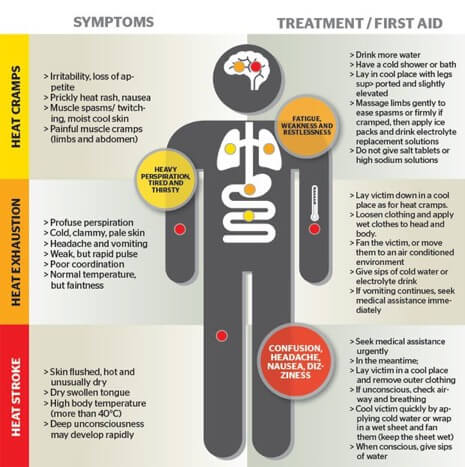
Heat cramps are muscular pains and spasms that usually occur in the legs or abdomen. Heat cramps are often an early sign that the body is having trouble with the heat. Treatment includes getting the person to a cooler place and having him or her rest in a comfortable position. Lightly stretch the affected muscles and gently massage the sore areas. Give an electrolyte-containing fluid, such as a commercial sports drink, fruit juice or milk. Water may also be given. Salt tablets are not recommended.

Heat exhaustion is a more severe condition than heat cramps. Signs of heat exhaustion include cool, moist, pale, ashen or flushed skin; headache; nausea; dizziness; weakness; and exhaustion. Treatment involves moving the person to a cooler environment with circulating air. Removing or loosening clothing and applying cool, wet compresses or towels to the skin. Fanning or spraying the person with water can also help. If the person is conscious and able to swallow, give small amounts of a cool liquid such as a commercial sports drink or fruit juice to restore fluids and electrolytes. Milk or water may also be given. Give about 4 ounces of fluid every 15 minutes. If the person’s condition does not improve or if he or she refuses water, has a change in mental status, or vomits, call 9-1-1 or the local emergency number.

Heatstroke is a life-threatening condition that usually occurs by ignoring the signals of heat exhaustion. Heatstroke develops when the body systems are overwhelmed by heat and begin to stop functioning. Signs of heatstroke include extremely high body temperature, red skin which may be dry or moist; changes in mental status; rapid, weak pulse; rapid, shallow breathing; confusion; vomiting; and seizures. Heatstroke is life-threatening. Call 9-1-1 or the local emergency number immediately.

Treatment involves rapidly cooling the body by immersing the person up to the neck in cold water, if possible OR dousing or spraying the person with cold water. Sponging the person with ice water-doused towels over the entire body, frequently rotating the cold, wet towels, and covering the person with bags of ice. If you are not able to measure and monitor the person’s temperature, apply rapid cooling methods for 20 minutes or until the person’s condition improves. Fortunately, heat-related illnesses can be avoided using common sense.

Preventing Heat Stroke

Summer is just around the corner, and with the promise of summer break approaching, you may find that you are planning more outdoor activities for you and your family. The goal of this week’s blog is to discuss the importance of preventing heat stress in children and infants. For more information on sun protection and sunscreen, please see Dr. Paxton’s blog post on this topic from March 2016.

In Utah, we are no stranger to intensely hot, dry weather. In this climate, children and infants can become quickly dehydrated if not adequately prepared. While it’s important to ensure that your children remain active and play outside during the summer months, keep in mind that when the temperature rises too high levels, or if you are traveling somewhere with very high humidity, intense activities such as hiking, running, riding a bike, etc. that last longer than 15 minutes should be minimized to prevent heat stress and heat stroke. Limiting the time spent outside between the hours of 10:00 am and 3:00 pm will also protect against the most intense UV light that can cause sunburns.

Dehydration is the major concern when participating in any prolonged activity outside in high heat and/or humidity. This can be easily prevented by providing adequate rest and hydration to children. Children are at a higher risk of becoming dehydrated compared to adults because, for their weight, children’s body surface area is larger.

Spotting dehydration can be tricky if you’re not sure what to look for. Early on, children may complain of fatigue, thirst, lack of energy, and feeling hot. You may notice that their lips and/or tongue are dry. If a child is complaining of thirst, they are already slightly dehydrated. Children should be given plenty of opportunities to drink water and remain hydrated before, during, and after activities outside. When remaining active outside for less than one hour, drinking water is sufficient. Breaks should be provided every 20 minutes to allow children to have water and/or sports drinks to ensure adequate hydration. They should be drinking 5 to 9 ounces during these breaks. Be sure to dress your active child in lightweight, light-colored clothing when outdoors, and that they change any sweaty clothing with dry clothing as soon as possible. Any child who is feeling dizzy, lightheaded, or nauseated should be removed from the activity promptly and brought somewhere cool and allowed to drink water.

Prompt recognition and treatment of dehydration are important so as to prevent progression to heat cramps, heat exhaustion, and heatstroke. Heat cramps are characterized by painful cramping of the muscles, usually in the abdomen, arms, or legs. Heat exhaustion presents with dizziness, nausea, vomiting, headache, weakness, and muscle pains. Rarely, children can become unconscious when suffering from heat exhaustion. Heatstroke occurs when the core temperature rises to 104 or higher and the child has symptoms of nausea, vomiting, seizures, disorientation, lack of sweating, and shortness of breath. Children suffering from heatstroke may become unconsciousness, and rarely comatose if not treated promptly. Heatstroke is a medical emergency and can result in death if left untreated.

For infants and small children, the focus of preventing heat stress and heat-related illness is different. Most people have heard of the sad event of an infant or toddler who was left in the car during the summer months and suffered heat illness, heatstroke, and even death. Infants and younger children are unique from older children as they lack the ability to regulate their body temperature in the same manner. For this reason, it’s especially important to pay close attention to the comfort of your infants and small children in hot environments, especially in the car during the summer months.

When traveling with infants and young children, make sure that you ALWAYS check the back seat to make sure everyone is out of the car when you reach your destination. For those families who have older children who help take care of infants and toddlers, NEVER entrust this responsibility to them. As a parent, it is your responsibility to make sure that everyone is safely out of the car. Too often have infants and children been left in the car unintentionally because an older sibling was responsible for getting them out and, for whatever reason, forgot. Because the temperature inside the car can reach dangerously high levels quickly, you must NEVER leave a child alone in the car, even if it’s just for a quick trip into the store. If your infant or small child is accidentally left inside a hot car for a prolonged period of time, seek immediate medical attention for observation to ensure that they are OK.

Resources:

Canyon-View_Provider_Taylor-Sorenson
providers
Taylor Sorenson, DO
801-798-7301
Family Medicine
providers
Courtney Rogers, LCMHC, NCC
providers
Joey Payne, AMFT
services
Behavioral Health
Load more results