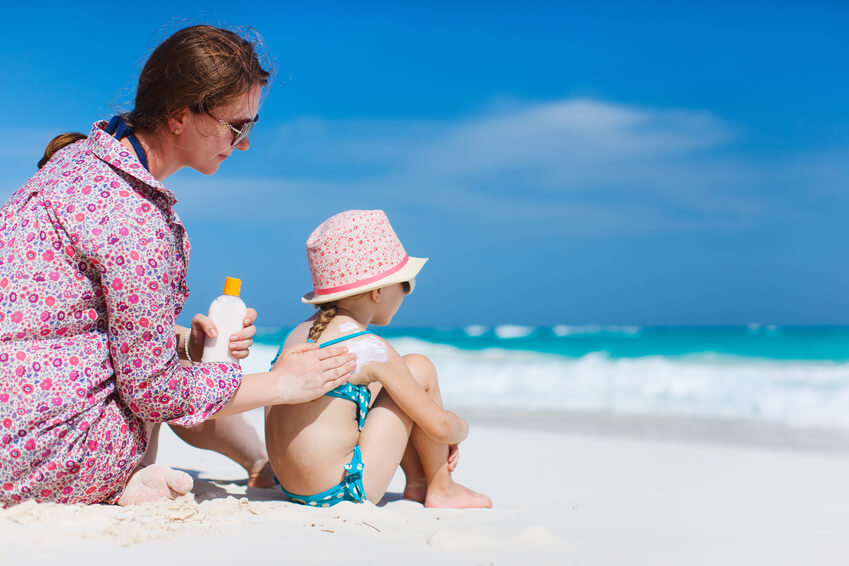
Summer Sun Safety

Your skin is exposed to the sun’s harmful ultraviolet rays every time you go outside, even on cloudy days and in the winter. Sunscreen can protect your skin against burning, skin cancer, and premature aging. Whether you are on the beach, at an amusement park, or walking through the city, always remember to use sunscreen. The American Academy of Dermatology recommends that you choose a sunscreen that has an SPF (Sun Protection Factor) of 30 or higher. It should also provide broad-spectrum protection from both the UVA and UVB rays. If there is any question check the label.

Apply the sunscreen generously before going outdoors. The sun’s rays are strongest between 10 a.m. and 4 p.m. It takes approximately 15 minutes for your skin to absorb the sunscreen and protect you. If you wait until you are in the sun to apply sunscreen, your skin is unprotected and can burn. Most adults need at least one ounce of sunscreen, about the amount you can hold in your palm, to fully cover all exposed areas of your body. Rub the sunscreen thoroughly into your skin. Apply sunscreen to all bare skin. Remember your neck, face, ears, tops of your feet (especially if you are wearing sandals) and legs. For hard‐to‐reach areas like your back, ask someone to help you or use a spray sunscreen. If you have thinning hair, either apply sunscreen to your scalp or wear a wide‐brimmed hat. To protect your lips, apply a lip balm with an SPF of at least 15. Reapply sunscreen at least every two hours to remain protected. It is also a good idea to reapply after swimming or sweating. Typically people who get sunburned didn’t use enough sunscreen, didn’t reapply, or used an expired product. Remember water, snow, and sand can reflect the damaging rays of the sun, which can also increase your chance of sunburn.

Other precautions you can take to protect yourself from the sun include wearing protective clothing like a long-sleeved shirt, pants, a wide-brimmed hat, or sunglasses. You can help others stay protected by offering them some of your sunscreens and sharing your shade.


Smart Fun In The Sun

The summer sun is a welcome change to the cold and snow of winter. It warms the air and seems to lift our spirits while at the pool or hitting your favorite hiking trail. Our summer activities often provide a hefty amount of sun exposure, and the tan lines that remain provide evidence of fun had while soaking in a few rays. And when we enjoy too much of a good thing the painful sting of a sunburn reminds us that more care should have been taken to protect ourselves.

Sunburn is the short-term complication that results from excessive exposure to the sun. It can result in pain, redness and even blistering. Fortunately, there are measures to take that can protect from the damaging effects of the sun. The first is to seek shade. Trees, and umbrella, or other shade structures can allow you to participate in outdoor activities while still avoiding some of the sun’s damaging rays. The middle of the day is when the sun’s rays are the strongest, approximately 10 AM to 4 PM in the continental United States.

If you plan to be out in the sun for an extended period, prepare yourself with protection. Sunscreen is available in a wide variety of products. The sun protection factor, or SPF, is an indicator of how much protection is offered by a specific product. It is recommended that a sunscreen with an SPF of 30 or greater be used on exposed skin. It should be applied generously 15 to 30 minutes prior to sun exposure. And that you reapply every 2 to 3 hours. Applications may need to be more frequent in activities such as swimming.

In addition to sunscreen, covering exposed skin with clothing provides the needed protection. A wide-brimmed hat can be very helpful in shading the face ears and back of the neck. Also, sunglasses that block UV rays protect the eyes and can reduce the risk of developing cataracts.

Children are at higher risk for sunburn than adults. This is likely due to children being less aware of the risks for sunburn and that they are less likely to use sunscreen and shade it to protect themselves. For children younger than six months of age it is recommended that the parents use hats, clothing, and shade structures to protect from sun exposure in addition to using sensitive skin or baby formula sunscreens.

The cumulative effects of sun exposure go beyond sunburn. Individuals with several sunburns or prolonged exposure do you have increased risk for skin cancer. The most dangerous of these is melanoma.  Many people think that tanning is protective to the skin. This may provide a small amount of protection to sunburn. However, this does not outweigh the risk of skin cancer associated with tanning.

As a physician, I encourage people to enjoy outdoor activities. There are many benefits that come from recreation and physical activity. I personally enjoy cycling, hiking, many other activities possible in the outdoors. Just remember to plan and take the necessary precautions to protect yourself and children from the dangerous effects of the sun.

Canyon-View_Provider_Taylor-Sorenson
providers
Taylor Sorenson, DO
801-798-7301
Family Medicine
providers
Courtney Rogers, LCMHC, NCC
providers
Joey Payne, AMFT
services
Behavioral Health
Load more results