
Skin Protection – More Fun in the Sun

Spring – a common time for sunburn

Spring is a wonderful time of year for many reasons. The days are getting longer, the winter illness season is coming to an end, and many outdoor activities are beckoning once again. However, it is also the time of year when many severe sunburns occur. There are several reasons for this:

  1. Many people’s skin is quite pale after the long winter, and more vulnerable to burn.
  2. The air is generally cooler than in the summer, so it is more difficult to feel when a burn is occurring.
  3. The sun is getting higher in the sky, so the rays are becoming more direct, and are therefore more likely to cause skin injury.
  4. Spring sports and yard work can abruptly increase the amount of time people spend outdoors.
  5. Some people are anxious to get tan after winter and try to do it all at once.
  6. While we associate many summer activities with the need for sun protection, spring activities often don’t trigger this thought.
Preventing sunburn is important

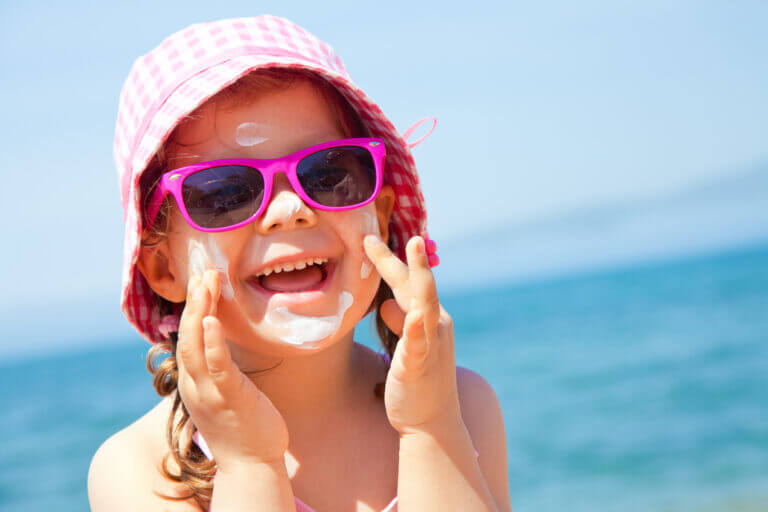
There are many health hazards associated with sunburn, the most serious of which is the aggressive form of skin cancer known as melanoma. Occasionally, this type of cancer is diagnosed in people in their teens. Exposure to the sun’s radiation increases the risk of genetic mutations in our skin cells which can lead to this dreaded condition. 

But that’s not the only reason to avoid getting burned. These are true burns and can range in severity from superficial first degree burns with only mild discomfort, to deep second degree burns with blistering, extreme pain, and sometimes permanent skin changes. The younger a child is when sunburn occurs, the more severe the damage is likely to be. 

Another concern with sunburn is the increased risk of other heat-related injuries. Someone with a severe sunburn is more likely to suffer heat exhaustion or heat stroke, which can lead to severe illness and even death. Occasionally, sunburns can affect a large enough portion of the body to cause the serious conditions associated with other significant burns, including susceptibility to infections and temperature regulation problems.

How to protect our children (and ourselves)

As with many things relating to our health, an ounce of prevention is worth a pound of cure. We should think about sun protection every day. Here are a few specifics that may help:

  1. Sun protective clothing and hats are usually the most effective means of preventing skin injury due to the sun, especially in infants and toddlers.
  2. Sunscreen, with an SPF of at least 30, is important to use on exposed skin.
    1. It should be applied about 20-30 minutes before sun exposure, sweating, or getting wet.
    2. Be sure to use enough. For an adult, this might mean up to 1-2 ounces per application.
    3. Reapply after getting wet, even if the sunscreen claims to be waterproof.
    4. Sunscreen can be used on babies, but the time spent in the sun should be very limited in this vulnerable population.
    5. Remember that sunscreen and insect repellent often don’t go well together, and may even inactivate each other. Read the labels carefully.
  3. Beware of reflected sun, whether from snow or water or even concrete, as this can greatly increase sun exposure, especially in young ones.
  4. Pay attention to the UV index, found on most weather reports and apps, to know when the sun will be most likely to cause harm.
  5. Avoid being outside between the hours of 10:00 AM and 3:00 PM as this is when the UV index is typically highest.
  6. Wear sunglasses which block 100% of the UVA and UVB rays, because eyes can get sunburned too.
  7. Avoid the use of tanning oils and creams as these do not block the sun’s harmful rays.
  8. Never use tanning beds, especially children and teens, as this direct exposure to harmful UV rays greatly increases the risk of the problems mentioned above.

As pediatricians, we strongly encourage outdoor activities because of the many health benefits they provide. Most adults, and many children, would do well to spend more time out of doors. We should also focus on doing so in a safe manner, so as not to cause unintended harm. By keeping these simple ideas about sun protection in mind, we can all better enjoy this wonderful spring season and the summer which is just around the corner.

Sun Protection Done Right

After a long dreary winter and a cool rainy spring, the sun’s rays are a welcome change. The sunshine is invigorating, motivating and inspiring. Despite the draw to soak in the sun, it is important to remember more is not better. Our skin is the largest organ in the body and is actually quite complicated. It is essential in regulating our temperature and is our first line of defense. It is vital in the production of certain vitamins and is our way of sensing the outside world through touch.

We tend to take our skin for granted, almost like the modern conveniences of a paper and pencil. For example, when we discover a mistake when writing on a piece of paper, we can simply erase the error and then go on writing. Doing this a few times is not a problem. The mark is easily erasable and there is no evidence on the paper of previous writing. However, if we do this over and over on the same part of the paper, the paper will eventually become thin, frayed and damaged. If we try to erase on a wet piece of paper, the damage appears more quickly or may leave smeared evidence of our flaws. If we mistakenly use a pen or Sharpie instead of a pencil and try to erase the paper, we usually can’t erase our careless markings.

Think of our skin in this way. Exposure to harmful rays, over and over and over, will cause damage to our skin. Our skin will become less elastic, thin and wrinkled. We may see evidence of previous sun exposure as permanently discolored skin. Excessive sun exposure, leading to burns and blistering may permanently damage the skin, almost like trying to erase marks on a piece of paper.

Once the permanent damage is done, there is no practical way to repair the paper or the skin. When you think of the amount of time many people spend in the sun, unprotected from UV rays, it is no wonder that skin cancer is the most common cancer in America. The UV rays damage the skin leading to burns, wrinkles, age spots and cancer. The American Academy of Dermatology Association estimates that approximately 9,500 people in the U. S. are diagnosed with skin cancer every day…..which translates to almost 3.5 million cases annually. That’s more cases of skin cancer diagnosed every year than the number of people living in the entire state of Utah!

Whether the sky is a bright blue or steely gray, ultraviolet (UV) rays, that are not visible to the human eye, are infiltrating the atmosphere and penetrating into our skin. Ultraviolet rays are merely a form of energy. (…just like microwaves are a form of energy used to cook food or another form of energy, x-rays, allow us to look “through” the skin to see the underlying bone structure.)

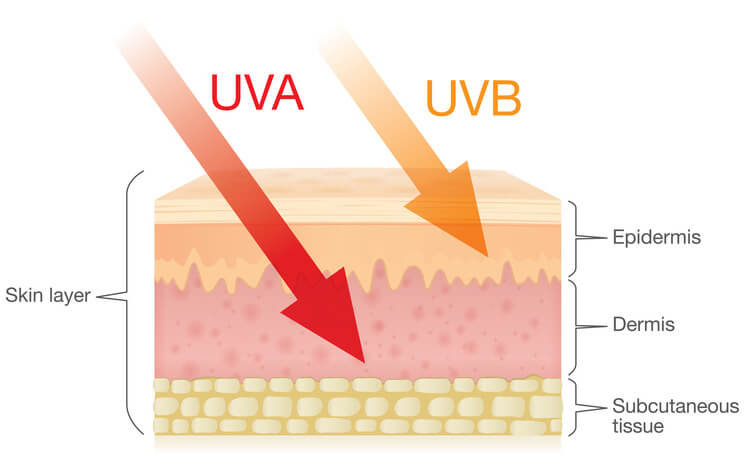
There are 3 forms of UV rays emitted from the sun; UVA, UVB and UVC rays.

UVA rays have a longer wavelength which allows them to penetrate deeper into the skin. They are primarily responsible for premature aging, called photoaging, by damaging the deep structural components of the skin (elastin and collagen). Elastin and collagen are what give the skin a smooth and youthful appearance. When these fibers are damaged, destructive enzymes cause the cells to malfunction. This malfunctioning leads to abnormal regrowth and rebuilding of the skin, leaving a wrinkled and leathery appearance. UVA rays account for up to 95 percent of the UV radiation reaching the Earth’s surface and have the ability to penetrate through glass.

UVB rays are the primary culprit of sunburn and cancer. They have slightly more energy than UVA rays and can directly affect the DNA of the cells, causing malfunction of normal regulatory mechanisms and erratic cell growth.

UVC rays contain more energy than UVA or UVB rays. Fortunately, the ozone layer effectively blocks this energy from penetrating into the earth’s atmosphere.

To prevent excess damage to the skin from ultraviolet radiation, it is important to learn how to block or avoid UV rays. This should be done by using the right type of sunscreen, wearing protective clothing and adapting certain behaviors to avoid excess exposure to UV rays. As you get ready for summer fun and celebrations, here are some friendly reminders of how to protect your skin.

1. Avoid being out in the sun during the hottest times of the day, when the sun is most intense, from 10 am to 2 pm (4 pm is even better).

2. When you are outside, look for areas of shade, whether that’s an umbrella, trees or awning.

3. Use a broad-brimmed hat (a rim of 3 inches) to shade the face, neck, and ears.

4. Wear protective clothing. Fabrics with a tighter weave (like lycra/elastane, nylon, and polyester) inherently shield the skin from ultraviolet rays. Choose clothing that is appropriate for your type of activity. For example, a tightly woven long-sleeve, yet cool cover-up is perfect for the beach while wearing a collared shirt with an extra layer of fabric at the shoulders and a vented yolk is more suitable for a hike. Look for UV clothing with a high UPF protection factor. Clothing that has The Skin Cancer Foundation’s Seal of Recommendation will also limit exposure to UV rays.

Note: UPF rating is reduced as the fabric becomes wet, worn, faded or overstretched. Follow the laundering instructions on the clothing to preserve the protective quality of the clothing.

5. Consider wearing a rash guard or swim shirt to protect your back and shoulders.

6. Remember, UV light can bounce off reflective surfaces (ie: water, snow, glass), increasing the exposure to ultraviolet rays by hitting your skin twice (once from the sun AND as it is reflected from the water onto your skin again).

7. Use sunglasses that filter out 100% of the UV rays.

8. Wear sunscreen with a sun protection factor (SPF) of at least 15 for everyday incidental exposure and 30 for higher for extended exposure.

The next time you are enjoying the invigorating warmth of the sun’s rays, remember how important it is to preserve that beautiful veneer we call skin. Properly protecting from damaging UV rays will decrease painful sunburns, reduce your risk of skin cancer and minimize premature aging and wrinkles.

Sources:

https://www.ncbi.nlm.nih.gov/books/NBK268889/

https://www.ewg.org/sunscreen/

https://www.theguardian.com/us-news/2019/may/22/chemicals-in-cosmetics-us-restricted-eu

https://www.fda.gov/cosmetics/resources-industry-cosmetics/small-businesses-homemade-cosmetics-fact-sheet#1

https://www.consumerreports.org/sunscreens/what-you-need-to-know-about-sunscreen-ingredients/

Canyon-View_Provider_Taylor-Sorenson
providers
Taylor Sorenson, DO
801-798-7301
Family Medicine
providers
Courtney Rogers, LCMHC, NCC
providers
Joey Payne, AMFT
services
Behavioral Health
Load more results