
At the age of 11, my younger brother started to experience the three key symptoms of diabetes; excessive thirst, frequent urination, and extreme hunger. He was continually eating food and drinking water, but we thought he was going through a growth spurt.
However, he was later admitted to Primary Children’s Hospital in Salt Lake City and diagnosed with type 1 diabetes. I was 15 years old at the time of his diagnosis. I remember my parents telling me what was “wrong” with him, but I had no understanding of the disease or that it would be a life-long battle for him.
When my little brother stabilized and was getting closer to being discharged, we had to meet with the diabetes educator; this is where I learned that my brother would need to give himself a shot of insulin daily. I don’t know about you, but at 15, I had a strong dislike and fear of needles. Even with that fear, I had to help my family when I could and somehow got convinced into letting my little brother practice on me. I don’t remember much else from that day, but I won’t forget the shot he administered in my abdomen and him testing my blood sugar.
As I finished high school and started thinking about career options, I knew that I wanted to be a nurse. While in nursing school, I learned about different diabetes types, such as type 2 diabetes and gestational diabetes. I already knew about type 1 diabetes because of my personal experience with the disease, and now I had to understand these different types. When I began my career as a bedside nurse, I quickly learned that I would be dealing more with type 2 diabetes than type 1. Type 2 diabetes is more common than type 1 diabetes because it directly correlates with obesity and living sedentary lifestyles.
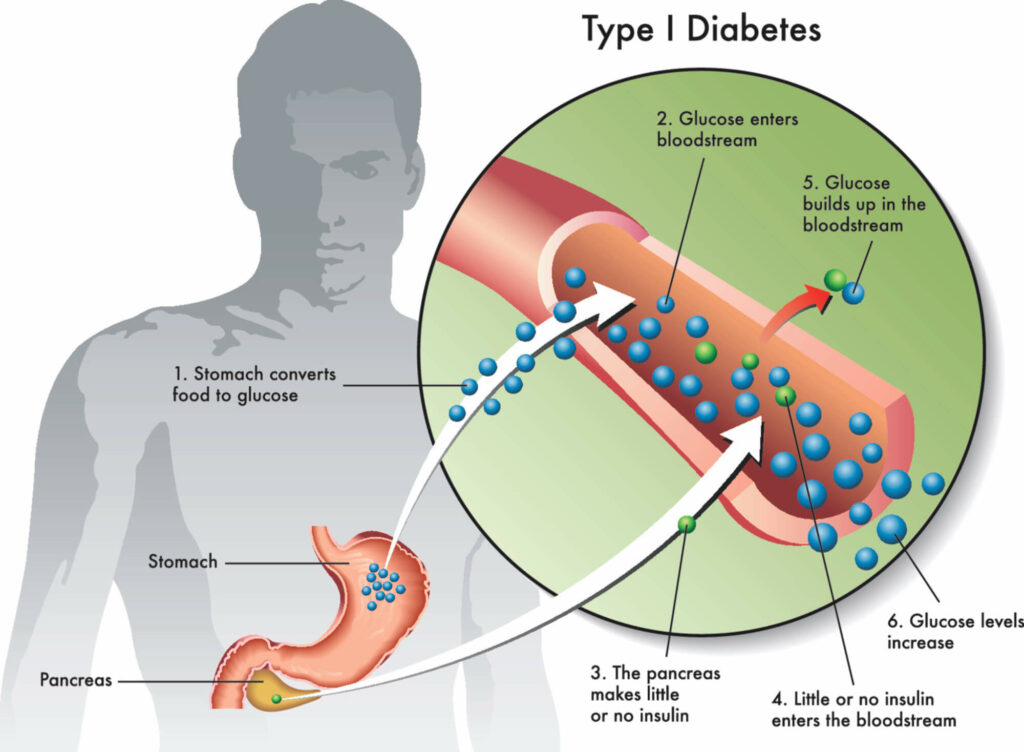
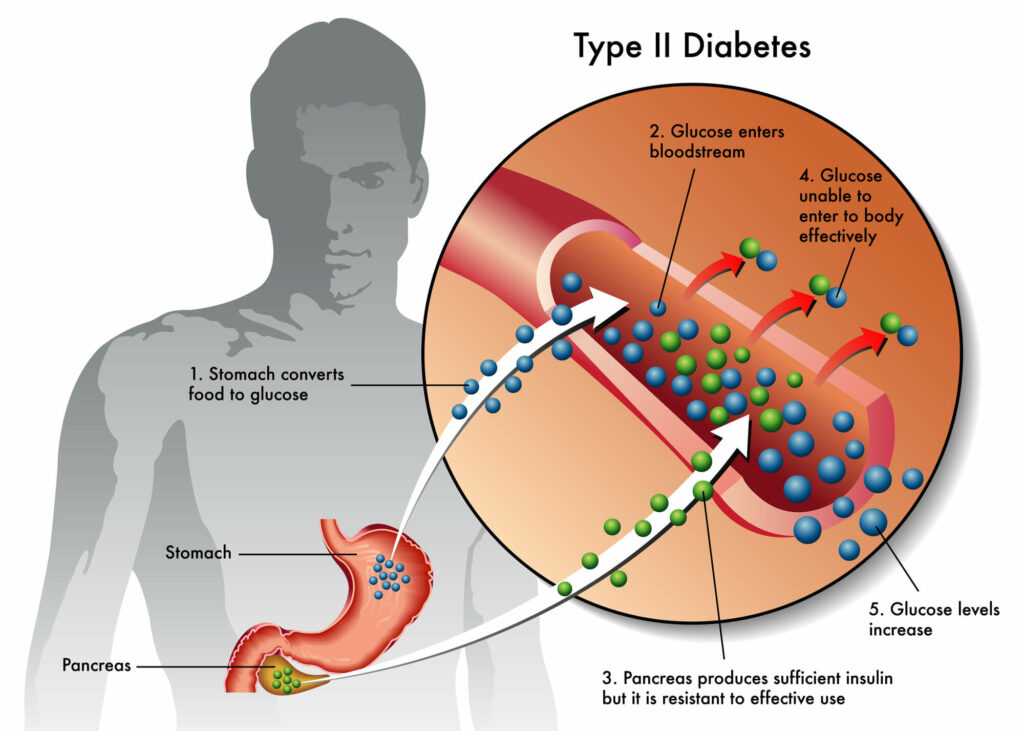
In the United States, approximately 1 in 10 people struggle with diabetes (CDC, 2019). Type 1 diabetes likely occurs after an environmental trigger occurs in a susceptible person. This environmental trigger initiates the immune system to destroy the insulin-producing cells in the pancreas. Once these cells are destroyed, your body can no longer make insulin to lower their blood sugar. Type 2 diabetes develops when insulin resistance occurs, and the liver produces too much glucose, or when insulin secretion from the pancreas becomes inadequate. Early within the disease process, the muscles, liver, and fat become resistant to insulin. This isn’t damaging to the body in the beginning because the pancreas will compensate for these systems. The pancreas notices the increase in blood sugar levels and will make more insulin to cover the needed amount. Eventually, the pancreas becomes overworked, and it stops producing enough insulin to compensate. When this happens, our blood sugar level remains elevated, and a diagnosis of type 2 diabetes occurs.
At this point, you may be asking yourself, “how do I know if this is happening to me?” The best way to know if you have type 2 diabetes or are prediabetic is to come to any provider at Canyon View Medical Group. Your provider can perform a lab test called Hemoglobin A1C. The lab result gives your provider your average blood glucose level for the last three months.
A normal A1C, meaning no diabetes, is less than 5.6%. An A1C that is concerning for prediabetes is represented by an A1C of 5.7% to 6.4%. A patient is considered diabetic if their A1C is greater than or equal to 6.5%.
If your provider informs you that you are prediabetic, they will provide counseling on the importance of changing your diet and initiating an exercise program. These two interventions are critical to lowering your A1C and preventing you from becoming a type 2 diabetic. If you have type 2 diabetes, your provider will stress the importance of lifestyle changes similar to what is done for prediabetic patients and will likely start you on medicines to lower your A1C. The medications your provider prescribes will work well at reducing your blood sugar level, but the best results come from a combination of drugs, diet, and exercise. Once you have type 2 diabetes, you will visit your healthcare provider every three months to check your A1C%. Most type 2 diabetics have an A1C goal of less than 7%.

The importance of maintaining an A1C of less than 7% is to prevent chronic complications of type 2 diabetes. These complications affect many organ systems and are responsible for most morbidity and mortality with the disease (Fauci et al., 2017, p. 2285). The complications associated with type 1 and type 2 diabetes include both vascular and nonvascular. The vascular complications, meaning the problem exists within the veins, include; issues with the eyes, nerves, kidneys, heart, arteries, and brain (Fauci et al., 2017, p. 2285). The nonvascular complications, which is when the problem occurs outside of the veins, include; slow gastric emptying, infections, and skin changes (Fauci et al., 2017, p. 2285).
Diabetes is a serious disease. Type 2 diabetes can be prevented or reversed by implementing lifestyle changes, like changing your diet and exercising. If you have more questions about diabetes or want to get tested for the disease, please call and make an appointment with your provider.
References
CDC. (2019, May 13). Diabetes. Retrieved October 11, 2020, from https://www.cdc.gov/diabetes/basics/type2.html
Fauci, A. S., Braunwald, E., Kasper, D. L., Hauser, S. L., Longo, D. L., Jameson, J. L., & Loscalzo, J. (2017). Harrison’s principles of internal medicine (17th ed.). McGraw Hill Medical.