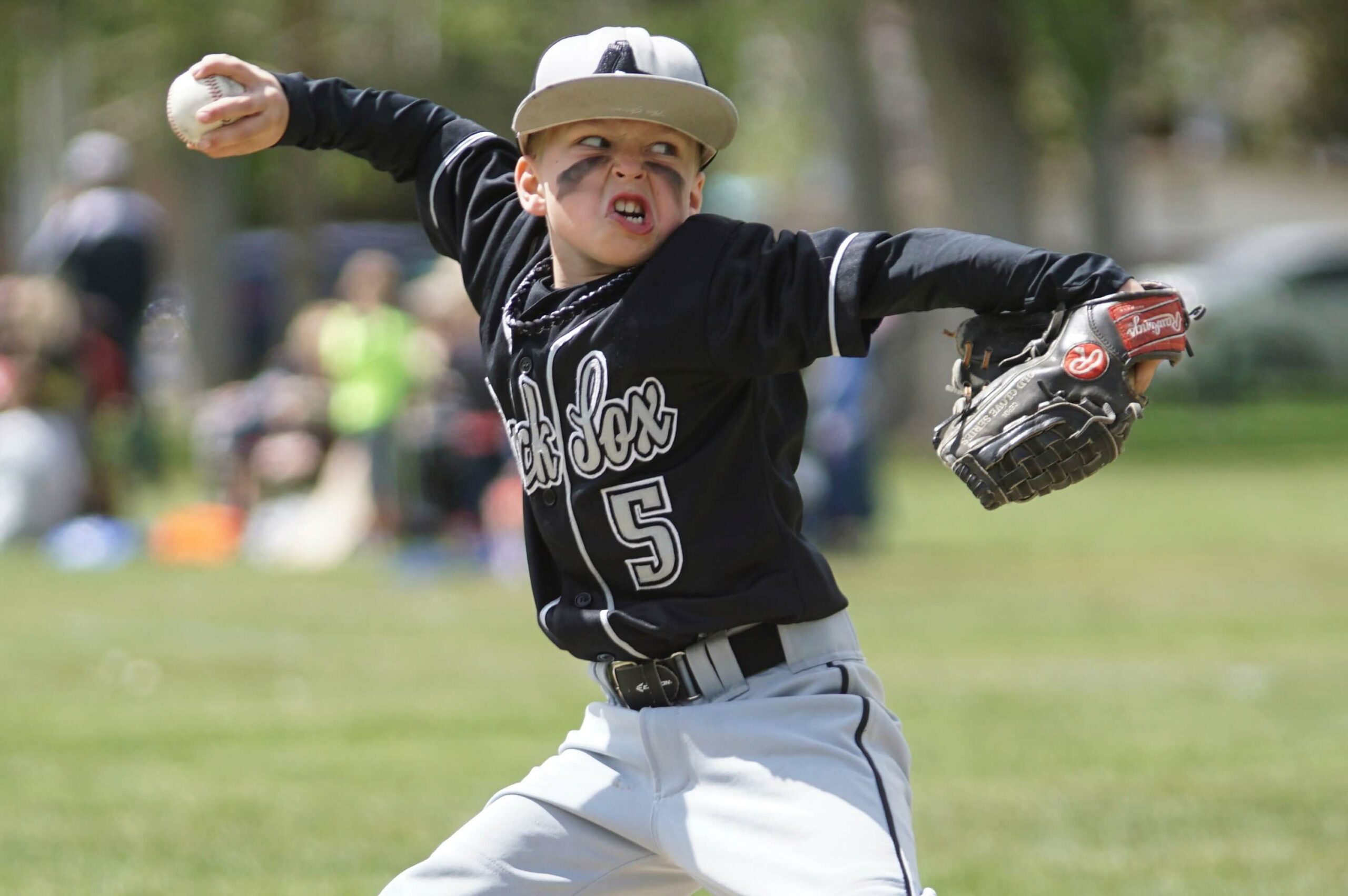
Baseball was his love. On the mound, he was king and found the admiration of his teammates and spectators. Everything else in life revolved around the singular experience of pitching for his team. This was his social life, his passion, his reason to get up in the morning. He didn’t have another position he liked or the sport he enjoyed. The school was a necessity that interrupted his thoughts about pitching strategy. He practiced relentlessly – curveball, slider, knuckleball, fastball, change up – he could throw them all with precision. Midway through the season, his inner elbow began to hurt during the second inning of a league game. He brought his team to victory after six innings but was in pain after the game. Each subsequent pitching experience brought more discomfort but his passion overpowered any desire to quit or complain. Three weeks later his dad noticed that his pitch accuracy was off and he seemed to favor his elbow. The next day the doctor said he had medial epicondylitis – little league elbow, and he had to stop pitching for six weeks. The news was devastating but he supported his team from the bench with the hopes to pitch in the showcase tournament in two months. The elbow pain subsided and doc cleared him to play just before the pinnacle tournament of the year. He pitched his team to victory in the first game, but in the seventh inning, he experiences sudden severe elbow pain and had to be replaced. He never pitched again. The X-ray showed that the ligament attachment to the elbow growth plate had partially detached. Recovery would be long and a return to pitching was discouraged.
His world imploded. After his elbow pain resolved he tried some other positions but couldn’t contribute well to the team. Coach had to cut him to make way for other players who could help them win. His passion for everything collapsed. School was drudgery. His social life evaporated. He was a changed boy, full of negativity and pessimism. Video games became his solace and consumed his time late into the night. Grades plummeted. Appetite decreased. He snapped at his family and mostly stayed in his room.
This is an example of overuse injury which plagues much youth. It is estimated that 50% of youth sports injuries are caused by excess stress on the body. Unlike traumatic injury and strain/sprain injury, which is only partially preventable, an overuse injury that leads to disability is 100% preventable. Losing the ability to play a sport can have a devastating impact on a kid’s character, mental wellness, social life, academic achievement, interpersonal relationships, exercise, and physical wellness, etc. This article will discuss what overuse injuries are, how they occur, how to prevent them, how to manage them when they occur and a review of baseball pitching overuse studies and recommendations.
WHAT IS A YOUTH OVERUSE INJURY?
An overuse injury in youth develops from repeated stresses causing micro-trauma to bone or cartilage. Muscles, tendons, and ligaments are rarely involved because they are stronger than their attachment or insertion site to the bones.
WHY DO OVERUSE INJURIES OCCUR IN YOUTH?
- The pre-adult skeleton has cartilage, like floppy ear tissue, at the insertion site of muscles, tendons, and ligaments into the bone. This is like having a powerful machine delivering force via a metal cord attached to a plastic shaft with a marshmallow.
- During the rapid growth phase of adolescents, bone density decreases as resources are used to lengthen bone.1
- Bones are strengthen by cells called osteoblasts that are stimulated by stress placed on the bone. But strengthening first involves a weakening process in which cells called osteoclasts reabsorbs weaker bone tissue. The result is that applied stress to strengthen bones actually weakens bones initially which creates the setting for stress injury and stress fracture. The same process occurs in cartilage with chondroblasts and chondroclasts. Any conditioning process to strengthen tissues must allow time for weakening without injury so that strengthening can follow.
- Any forces that stimulate the tissues to strengthen can cause microtrauma to the tissues that the body must repair. If left unrepaired before more forces are applied, the microtrauma can be cumulative and lead to tissue breakdown. For example, a runner in conditioning may experience mild tibia pain after running. Given a few days this pain will resolve, but if the trauma is added upon with more running before healing occurs, it may eventually lead to a stress fracture.
HOW CAN OVERUSE BE PREVENTED?
Condition the body for the specific sport activity. Mechanical forces are different for every sport mechanism. Forces applied to the body are different for baseball than basketball or soccer. Somebody conditioning is common between sports, but an athlete should not assume that because they are trained for basketball in the fall that they are ready to play baseball in the spring. Also, different forces are applied to the body with different activities within a single sport. For example, because a pitcher is conditioned to throw a fastball he should not assume he is conditioned to throw a curveball. A gymnast who is excellent at the bar should not assume she is conditioned to vault, etc.
Allow adequate time for the body to adapt. How much time is that? No one really knows because it is likely different for every person depending on applied forces and body adaptation. Joel S. Brenner and the Council on Sports Medicine recommend not increasing more than 10% each week but that may be glacially slow for most athletes, and there are no supporting studies.2 Most simple fractures in youth take a month to heal to the point of being pain-free but take another one to two months to reach maximum strength. Likely conditioning increased by 25% each week will cause sufficient adaptation for performance within a month. The key is to watch carefully for signs of overuse and back off quickly – then reinitiate conditioning at a slower pace.
Athletes can’t rely on coaches to do slow conditioning. Coaches have many things to consider when managing a team and often have little time from the beginning of the practice season to the start of gameplay to get athletes ready for competition. Take responsibility for conditioning. Approach the coach one month ahead of the start of practice and inquire about maximum time, intensity and force loads you expect to experience during the maximum game and practice participation. The coach will love it. You will show you are interested in conditioning and preventing overuse injuries. Divide the maximum expected exercise rigor by four and advance by 25% each week over a month before practice starts.
Detect early warning signs and make adjustments. Overuse injury progresses in a predictable manner. If you pick up on early signs of a problem and make adjustments you can prevent dysfunction and disaster.
The first level is pain occurring towards the end of exercise activity and lasting for up to a few hours. This is without tenderness (pain with manual compression) at the joint or bone. Ice for about 15 minutes and stretch well. Keep playing and practicing tomorrow. Watch carefully for signs of worsening.
The second level is pain and tenderness at the joint or bone occurring towards the end and right after the activity. Ice 15 minutes three times a day and stretch well. Game and practice activity should be adjusted until your body catches up. How much and what activities can be engaged in depends on the site of tenderness. Overhead athletes have to back way off because of the tremendous forces applied to a focused area of tendon marshmallow growth plate attachment. A runner with growth plate irritation of the calcaneus could endure more activity. This is where you may need the help of a physician that understands sports medicine. Decrease volume, intensity or position for a few weeks to allow your body to catch up. Once tenderness resolves then resume play.
The third level is the pain of the joint or bone during play that interferes with functioning. This will usually be associated with tenderness as well. (Remember, pain or tenderness over muscle is usually from muscle strain. This is a different kind of injury managed in a different way not discussed here.) The third level requires the athlete to stop playing that day, ice three times a day, stretch well and not engage in any exercise that creates pain until tenderness and pain have resolved. It is good to continue a range of motion and light, nonimpact, pain-free exercise. For example, for knee tenderness at the proximal tibia, stationary bike riding would be good. When returning to play you should decrease volume, intensity, or temporarily change position. Recondition by gradually increasing sport-specific activity to develop the capacity to function completely in the position of choice. Again, consider seeing a physician at this level to diagnose the problem, assess mechanics, and determine further treatment plans.
The fourth level involves pain and tenderness during any sports activity and in-between sport participation with routine daily activity as well. Now you’re in real trouble! You have probably missed some of the above steps. See a physician – do not pass go.
Help the Coach
One of the greatest challenges of detecting early warning signs and making adjustments is how to work with the coach. Some coaches will automatically take measures to prevent overuse injury. Others seem to have little exposure to these principles, and a rare few actually disbelieve overuse injury is possible. No coach wants to hurt a player, but if a coach seems less than cautious about preventing overuse injuries, parents may have to advocate. There is a fine line between parents helping youth athletes make adjustments in competition to prevent injury vs making youth appear too fragile and vulnerable to play. Coaches need to be able to trust an athlete’s capacity in a competitive situation, so if there is a question about readiness to perform at 100%, the coach may prefer to have your athlete sit. Coaches have an enormous amount of information to manage to make the team run smoothly and be successful: scheduling, finances, player performance, team morale, parent morale, playing time and player position, player safety, rule adherence and referee fairness, and not least of all winning – good players won’t stay forever on a losing team. Complicated decisions about how much your athlete is ready to play and where they can perform may get lost in the shuffle. Coaches have to maintain a sense of control, professionalism, and administrative prerogative when handling decisions to avoid chaos. This means the coach may not appreciate parents stepping in to tell them how to position and play their athletes. What do you do?
- First of all take responsibility for supervising your athlete’s condition related to overuse injuries. Monitor play time, participation risk (example- pitch count for pitchers), and sudden changes in activity related to intensity or frequency. Ask your athlete about pain in joints and bones and if pain occurs, assess for tenderness. Be extra suspicious about early signs of overuse if you sense your athlete’s body is getting excessive wear and tear or performance expectations are changing too rapidly.
- Second, blame the doctor. That’s right – have a physician you trust to back you up when you approach the coach and say “Johnny’s been having some arm pain and I consulted with Dr. Bennett. He wants Johnny to keep playing as much as possible and feels he’ll be fine if we do the following things.” Coaches generally respect medical input on keeping athletes safe and having a doctor on board keeps the parent from challenging the coach’s authority.
- Third, be prepared to present some specifics so you don’t place a burden on the coach to make vague decisions you may not like. “Dr. Bennett says it would be better for him to pitch only two innings a week and play other positions for the next two weeks.” etc.
- Fourth, there are few coaches who believe it is impossible to injure kid’s joints by playing too much. If the coach seems to repetitively and recklessly ignore playing limits, you may need a different team and coach.
- Fifth, continually monitor your athlete for worsening in the steps of injury progression. If your athlete is getting worse, seek medical attention. Overuse injuries can progress to needing surgical treatment and can cause lifelong alterations in functioning.
Micro-trauma Loads are cumulative if inadequate rest is allowed for tissue adaptation. Persistent wear and tear will progressively weaken tissues if rest and catch up time is not allowed. This is one reason year round participation in one sport is not advised. Cumulative microtrauma is why pitch count guidelines were established for youth pitching with recommended days of rest to give the elbow and shoulder time to recover. Excess activity for many other sports has not been established. Good sense would dictate that if you play really hard for a few hours in one day you probably need a few days to catch up. Early warning signs will tell you if you’re doing too much.
Deconditioning occurs faster than reconditioning. Immobilization can result in muscle weakness within one week. Whenever the body requires immobilization or marked decreased usage for a significant time, deconditioning will occur. How long does it take to decondition? It is person and situation dependent, but if an athlete has had to reduce exercise activity for longer than two weeks, assume that reconditioning must take place to return to optimal function. That means that athletes can’t be expected to rest for significant time and then return instantly to peak performance and endurance. Keep moving and exercising as much as possible. Often athletes can alter the type of exercise to stay active and reduce stress on the affected body part. For example, an athlete with leg stress injury may be able to bicycle or swim rather that run to decrease impact loads until the leg pain improves.3
Get training on proper mechanics. The effect on mechanics is hard to determine in research studies because the loads put on the body have so many confounding variables such as height, weight, strength, conditioning, intensity, and frequency of activity, etc. For example with pitching, Lyman et al., 20024 evaluated mechanics with video analysis and then followed 476 pitchers over a year and did not show differences in the level of pain related to proper mechanics. However, 9-14-year-olds pitching sliders increased the risk of elbow pain and pitching curveballs increased the risk of shoulder pain. The most important discovery was the correlation in pain and the number of pitches thrown. Although the effects of mechanics are hard to prove in research studies, the importance of mechanics makes intuitive sense, especially for sports where large forces are applied intensely and focally to the distal body with torque loads generated centrally in the body. Baseball, soccer, volleyball, tennis, javelin, and discus are examples of this mechanism. Knowledgeable coaches can teach players to generate forces centrally and deliver them peripherally while minimizing rotation of the extremities that puts excessive forces on joints.
Do proper stretching. Stretching has been shown to decrease the risk of stain injuries but not overuse injuries.5 Dynamic stretching where athletic movements are simulated in stretching, coupled with some static stretching has been found to have the most performance benefits.6 Vigorous and prolonged static stretching has been shown to temporarily weaken muscles and thus is discouraged, especially before competition.7 However, this same phenomenon can theoretically spare traction forces on tendon insertion sites and thus is used prior to exercise in some forms of apophysitis or tendinitis. For example with Osgood Schlatter disease in which the patella tendon is causing the insertion site at the tibia to pull away and cause pain, an athlete might be instructed to do vigorous quadricep stretching before exercise. One speculated reason growing athletes may be prone to traction apophysitis is that long bones grow faster than muscles and tendons, thus putting increase pull loads at the sites of tendon insertions. Stretching, unfortunately, has not been shown to prevent this problem.5
Proper equipment can decrease tissue loads. The best-studied effect of equipment on pain and injury is the effect of proper shoes. Impact forces on the lower extremities, especially the feet, can be minimized by having shoes with adequate impact absorptive material. Shoes begin to lose impact absorption after 250-500 miles or 6 months of use.8 Insoles have been shown to decrease lower extremity stress injuries.9 It would make sense that the type of equipment used in sports would affect mechanical forces the body experiences. For example, bat weight and length would impact shoulder and elbow forces during hitting. Javelin type, tennis racquets, golf clubs, etc. would have similar effects.
EXAMPLE OF OVERUSE DISASTER
Our young pitcher friend degenerated from a social life he loved to major depressive disorder and global dysfunction. I have seen many athletes’ lives adversely affected by overuse injuries. Overuse injuries are estimated at about 50% of total youth athlete injuries and the vast majority are preventable. What went wrong that should have been prevented? First lack of detection of early pain related to pitching and adjustment in activity to allow catch up healing. He likely threw too much during and between games which created progressive microtrauma. Second and perhaps most crucial, after a period of prolonged rest he increased competitive pitching time way too fast which overwhelmed his cartilage tendon attachment. Third, he was way too specialized in his sport and social emphasis for his age.
Many youth dreams of playing at the professional level but the odds of a youth athlete making it to college sports are 1:100. The odds of a high school athlete making it to professional sports are 1:1000. Studies have shown that the majority of higher level athletes were diversified in youth and specialized later.10,11 Early specialization creates many problems: excessive year round overuse, decreased opportunity for play at other positions or in other sports if a change in activity is needed to provide catch up rest, lack of alternatives for continued sport participation when things don’t go well at a certain position, self-esteem and social devastation if playing opportunity is removed.
WHAT WE LEARN FROM BASEBALL PITCHING STUDIES
Baseball pitching is one of the best-studied overuse scenarios because pitching is mechanistically repetitive and highly trackable with gamebooks. Also, tremendous forces are generated in the core of the body and translated to focused points of cartilage in joints. The American Sports Medicine Institute (ASMI) has issued recommendations for pitchers based on research. http://www.asmi.org/research.php?page=research§ion=positionStatement
USA baseball and the MLB have adapted and revised these recommendations on a beautifully done website. http://m.mlb.com/pitchsmart
One of the most important statements on this website is this, “Daily, weekly and annual overuse is the greatest risk to a youth pitcher’s health. Numerous studies have shown that pitchers who throw more pitches per game and those who do not adequately rest between appearances are at an elevated risk of injury. While medical research does not identify optimal pitch counts, pitch count programs have been shown to reduce the risk of shoulder injury in Little League Baseball by as much as 50% (Little League, 2011). The most important thing is to set limits for a pitcher and stick with them throughout the season.”
We would hope for 100% overuse injury prevention in our athletes, not 50%. True enough that optimal pitch counts are not yet proven by medical research. It is important to realize that the pitching recommendations on these sites come from survey studies about what pitchers did and who developed pain or injury. Pitch counts in games are likely reliable but hard throws when not pitching are harder to quantify such as between game practice, warm up pitches, throws while playing other positions. The cause of overuse pitching injury is multifactorial, and therefore, it is hard or impossible to isolate specific factors to assess their causal contribution. The recommendations from ASMI come from identifying risk factors that stood out by being statistically significant. Activity recommendations often are generated from study data using aggregated player averages or activity but these numbers may not apply to prevent injury to individual athletes.
For example, one of the most important pitching studies, performed by Olsen, et al in 200612, obtained survey information from 95 adolescent pitchers who required shoulder or elbow surgery and compared their activity with 45 adolescent pitchers who stayed healthy. They found that the injured pitchers pitched an average of 7.9 months per year while the non-injured only pitched an average of 5.5 months – hence generating the ASMI recommendation that pitchers take 4 months off a year. However, the statistical standard deviation of injured pitching time was 2.5 months, which means that 34% of injured pitchers pitched between 5.4 months and 7.9 months and 13% pitched between 2.9 months and 5.4 months. Adolescent pitchers got injured pitching much less time than the recommended 8 months max by the ASMI. This recommendation is often not followed because it is very hard to shut high-level pitchers down for 4 months out of the year. Pitching prowess requires a lot of disciplined practice and when pitchers acquire a high skill level they don’t like to turn it off. In Utah, tournaments often start in March, then there is summer league and fall league intermixed with tournaments. The last tournament is often late fall. To get ready for March tournaments practice starts in mid-January. Conditioning should begin four weeks ahead to get ready for practice in case the coach starts you throwing like crazy. Maybe one month off? Not enough but competition pressures often drive the schedule.
Pitch count is heralded as one of the more repeated risk findings in studies for overuse in pitching. The ASMI site lists the 2006 USA Baseball Guidelines as well as the 2010 Little League Baseball Regulations which contains higher numbers. The pitch smart website uses a higher pitch count. Where did these numbers come from and how protective are they? They are generated from survey information relying on score record books like the Olsen, 200612 study mentioned. Helpful for sure but they aren’t written on gold plates from Sinai. The Olsen study of actual elbow and shoulder surgeries listed injured pitchers as throwing an average of 87 pitches per appearance compared with uninjured pitchers throwing an average of 66 per appearance. This increase in injury risk 4 times. However, the statistical standard deviation for injured pitchers was 21.8, meaning 34% of pitchers were throwing 66 to 87 pitches per appearance and 13% were throwing 44-66 pitches per appearance. Many surgically injured pitchers were throwing far fewer pitches than the pitch counts allow. The pitch smart recommended pitch counts for adolescents are 95 to 105 pitches per game, significantly higher than most injured pitchers threw in the Olsen study. Lyman, et al 20024 followed 476 pitchers age 9-14 for one season and found that per appearance pitches of 75 to 99 pitches increased the risk of shoulder pain by 35% and the risk of elbow pain by 52%. A 2017 study by Pytiak followed 27 players (who had 100% compliance with pitch count guidelines) with pre and postseason elbow MRIs and found that 48% developed abnormal MRI findings and 28% experienced pain at the end of a 12 week season.13 The only predictor was pitching more than 8 months over the previous year. Two of the three most severe changes on MRI in the medial elbow were in pitchers who pitched a very low number of innings. Bottom line is that pitchers are sustaining injury throwing fewer pitches than recommended in current pitch count guidelines. There’s more to preventing overuse elbow and shoulder injuries than following pitch counts.
There has never been (and probably never will be) a study that shows that the ASMI complete list of recommendations is completely protective of pitcher overuse injury. One reason is that there isn’t a studied population that actually followed all of the guidelines. Why is that? Ever heard a coach say, “No crying in baseball”? Ever heard, “Wear that pitch, we got ice”. One of the greatest things about baseball is that it teaches resilience in the face of adversity magnified by a hundred on-looking spectator eyes. Good baseball players have to ignore a great deal of stress and discomfort to play with composure. High-level pitchers rarely inform coaches without invitation when the elbow or shoulder starts to fatigue or hurt a little. They’ll mow down that last batter even if they never get to pitch again. That’s the determination and grit that brought pitchers to prestige on the mound. One of the most consistently demonstrated risk factors for injury is pitching with fatigue and pain. The study by Olsen14 showed that injured pitchers pitched with fatigue regularly 51% of the time compared with non-injured 11%. This increased the risk of injury to 36 times. Injured pitchers pitched with pain 67% of the time compared with non-injured 42%. Pitching with fatigue alters pitching mechanics that result in more adverse localized joint forces. Coaches can often detect fatigue by noticing a drop in pitch accuracy and speed. Pitching with pain is one of the signs in the progression of overuse.15
Pitching injury risk has definitely been shown to be cumulative. Another hallmark study, this one by Fleisig in 2011-16, followed 481 pitchers age 9-14 years prospectively over 10 years with yearly surveys and interviews. They concluded that pitchers throwing more than 100 innings per year were 3.5 times more likely to be injured and that the overall injury rate was 5%. Guess what the injury rate was for pitchers who threw less than 100 innings per year? 4% – only a 20 percent reduction in overall risk for throwing less than 100 innings in a year. Again, there is more to preventing overuse than pitch counts or cumulative pitch numbers. Baseball players who were both pitcher and catcher increased injury risk 2.7 times above baseline, but this was not considered statistically significant.
Studies have shown that young pitchers throwing breaking pitches increase the risk of elbow and shoulder pain but have not shown increased injury risk. Pain is a known risk for injury so there is still concern about these pitches in young athletes. Studies have not shown mechanics to significantly alter the risk of pain or injury. Just because something isn’t proven to be causative doesn’t mean that it has been proven not to be causative. It still makes sense that mechanics matter. A study by Tyler, et al 201417 showed that supraspinatus weakness, a marker for shoulder conditioning, increased the risk of injury 4.5 times above baseline.
MAIN PITCHING POINTS
- Every athlete is different in the forces their body generates with athletics, their level of conditioning and innate ability for their body to sustain applied load forces. Pitchers may experience overuse injury even following the pitching recommendations. The key is to apply good principles to conditioning for pitching, monitor carefully for early signs of overuse, and make adjustments.
- Understand the recommendations by the American Sports Medicine Institute so you will know the ideal and detect variances from current recommendations. Coaches will generally have more control over the following recommendations than parents, but parents can be prepared for early intervention if signs of overuse develop.
- Consider the ideal pitch count recommendation to be the USA baseball 2006 guideline: ten years old and under – 50 pitches per game; older than ten years- 75 pitches per game with a ceiling of 75 pitches for any adolescent. (Rather than use pitch count, It is easier to extrapolate to the number of batters a pitcher should see: (approximately 5- 6 pitches per batter) 8 – 10 batters for pitchers under ten and 12-15 batters for over ten years old. Observe recommended rest days between pitching. Be especially careful if you play for more than one team.
- Coaches and parents should ask pitchers about arm fatigue and pain – stop pitching if this occurs.
- Pitchers should not be allowed to pitch with any elbow or shoulder tenderness.
- Learn good mechanics and do year-round conditioning, especially supraspinatus exercises and other rotator cuff exercises. Throwers ten is a good set of shoulder exercises for overhead athletes This is a good pdf handout http://www.ortho.ufl.edu/sites/ortho.ufl.edu/files/handouts/throwers-ten.pdf This is a good demonstration video https://www.youtube.com/watch?v=zaTfaOFzV94
- Learn other positions and other sports to diversify and allow for throwing rest.
- After periods of extended rest always condition up slowly to maximum pitch counts over at least a month. Be especially careful with conditioning before tournaments as these are often separated from league play.
- Be careful with lots of hard-throwing between pitching appearances with practice and while playing other positions. Playing both pitcher and catcher is not a good idea.
- See a physician who understands sports medicine if there is any ongoing upper extremity pain or tenderness. Too many youth pitchers lose the exciting and rewarding opportunity to experience baseball nirvana on the mound at center stage because of mismanaged overuse injuries.
References:
- Size‐Corrected BMD Decreases During Peak Linear Growth: Implications for Fracture Incidence During Adolescence, Robert A Faulkner PhD, K Shawn Davison, Donald A Bailey, Robert L Mirwald, Adam DG Baxter‐Jones, Journal of Bone and Mineral Research, Vol. 21 No. 12, 2006
- Overuse Injuries, Overtraining, and Burnout in Child and Adolescent Athletes, Joel S. Brenner and the Council on Sports Medicine and Fitness, Pediatrics, June 2007, VOLUME 119 / ISSUE 6, American Academy of Pediatrics
- Activity vs. rest in the treatment of bone, soft tissue and joint injuries, Joseph A. Buckwalter, M.D., The Iowa Orthopaedic Journal, Vol.15, 1995
- Effect of Pitch Type, Pitch Count, and Pitching Mechanics on Risk of Elbow and Shoulder Pain in Youth Baseball Pitchers, American Journal of Sports Medicine, Stephen Lyman, Ph.D., Glenn S. Fleisig, Ph.D., James R. Andrews, MD, and E. David Osinski, MA, Vol. 30 No. 4, 2002
- To Stretch or Not to Stretch: The Role of Injury Prevention and Performance, Scandinavian Journal of Medicine & Science in Sports, M. P. McHugh, C.H. Cosgrave, 2010
- Acute Effects of Muscle Stretching on Physical Performance, Range of Motion, and Injury Incidence in Healthy Active Individuals: A Systematic Review, NRC Research Press, David G. Behm, Anthony J. Blazevich, Anthony D. Kay, and Malachy McHugh, 2015
- Does Pre-exercise Static Stretching Inhibit Maximal Muscular Performance? A Meta-analytical Review, Scandinavian Journal of Medicine & Science in Sports, L. Simic, N. Sarabon, G. Markovic, 2013
- Biomechanics of Running Shoe Performance, Cook SD, Kester MA, Brunet ME, Haddad RJ Jr., Vol. 4, No. 4, 1985
- Prevention of common overuse injuries by the use of shock-absorbing insoles, Martin P. Schwellnus, MBBCh, MSc, Gerhard Jordaan, MA, Timothy D. Noakes, MBBCh, MD, 1990
- Intensive Training and Sports Specialization in Young Athletes, Pediatrics, July 2000, VOLUME 106 / ISSUE 1, American Academy of Pediatrics
- Overuse Injuries, Overtraining, and Burnout in Child and Adolescent Athletes, Joel S. Brenner and the Council on Sports Medicine and Fitness, Pediatrics, June 2007, VOLUME 119 / ISSUE 6, American Academy of Pediatrics
- Risk Factors for Shoulder and Elbow Injuries in Adolescent Baseball Pitchers, Samuel J., Olsen, MD, Glenn S. Fleisig, Ph.D., Shouchen Dun, MS, Shouchen Dun, The American Journal of Sports Medicine, Vol. 34 No. 6, 2006
- Are the Current Little League Pitching Guidelines Adequate? A Single-Season Prospective MRI Study, Andrew V. Pytiak, MD, Phillip Stearns, CPNP, MSN, Tracey P. Bastrom, MA, Jerry Dwek, MD, Peter Kruk, MD, Joanna H. Roocroft, MA, Andrew T. Pennock, MD, The Orthopaedic Journal of Sports Medicine, Vol.5 Issue 5, 2017
- Baseball Pitching Biomechanics in Relation to Injury Risk and Performance, American Sports Medicine Institute, Dave Fortenbaugh, MS, Glenn S. Fleisig, Ph.D.,* and James R. Andrews, MD, 2009
- Risk-Prone Pitching Activities and Injuries in Youth Baseball: Findings From a National Sample, Yang J, Mann BJ, Guettler JH, Dugas JR, Irrgang JJ, Fleisig GS, Albright JP, The American Journal of Sports Medicine, Vol. 42 No. 6, 2014
- Risk of Serious Injury for Young Baseball Pitchers: A 10-Year Prospective Study, Fleisig, Andrews, Cutter, Weber, Loftice, McMichael, Hassell, Lyman, American Journal of Sports Medicine, 2011
- Risk Factors for Shoulder and Elbow Injuries in High School Baseball Pitchers, The Role of Preseason Strength and Range of Motion, Timothy F. Tyler, MS, PT, ATC , Michael J. Mullaney, DPT, Michael R. Mirabella, ATC, Stephen J. Nicholas, MD, Malachy P. McHugh, PhD, The American Journal of Sports Medicine, Vol.42 No. 8, 2014