Could Intermittent Fasting Help You?

The thought of fasting may invoke feelings of dread or moans and complaints, but the principle could deliver some potent health benefits. Intermittent fasting may be the key to helping you prevent and treat diabetes and lose weight.
What is Intermittent Fasting?

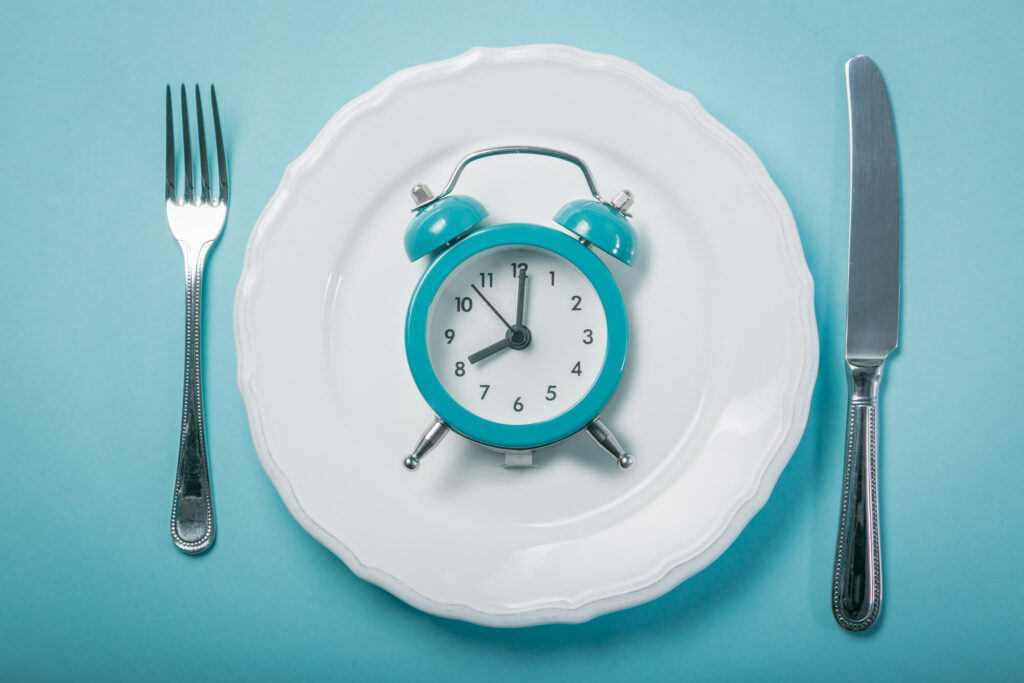
Intermittent fasting means choosing when to eat and when to abstain from food. It is deliberate and controlled. Cycling between eating and fasting helps to regulate the hormones that control glucose metabolism and fat storage. Intermittent fasting allows the body to draw energy from fat cells, which leads to weight loss.

Intermittent fasting is still somewhat controversial but can provide significant health benefits when used appropriately. It is not for every person or everybody.

How Does It Work?

To understand how periodic fasting works, you must appreciate the basics of digestion – energy consumption, storage, and some of the key hormones associated with regulating these processes. 

Food is broken down into smaller pieces in the digestive system so the nutrients can be absorbed into the bloodstream, then distributed throughout the body. Carbohydrates (like bread, pasta, cauliflower, and carrots) are sugar molecules that are chemically combined into long chains. Proteins (for example, meats and nuts) are made up of amino acids, and fats are composed of individual fatty acids. All are essential to the body. Since carbohydrates are made of sugar molecules, they are broken down into smaller pieces of sugar, called glucose. Glucose provides the energy that all cells need to function correctly.

This glucose (or energy) must either be used or stored. Insulin is the hormone that tells the energy where to go. It is the driver that controls whether glucose is pulled into the cells for immediate use or whether it will be stored in long or short-term storage locations. Glucose is initially stored short-term as glycogen in the liver and muscle cells. This storage location has limited space but is easy to access, and glycogen can quickly be converted back to its usable form of glucose.

When short-term storage is full, there is long-term storage with virtually unlimited space, but it takes a little more work to retrieve. This energy is stored in the fat cells. When there is an abundance of glucose in the bloodstream, and glycogen storage is full, glucose is pushed into fat cells. When fat cells are stuffed to capacity, the body can make more fat cells to store the energy. It’s a fantastic survival technique, but not necessary in our current society.

Compare it to heading to the airport to catch a flight. You can either be dropped off at the doors and head into the terminal immediately or have to go park. If you have to park a vehicle, you can go to short-term or long-term parking. The long-term lot has more space but is a little harder to reach. It takes more time and effort to catch the shuttle and get back to the front doors of the airport terminal to get to your desired location ultimately.

 When the body needs more energy, the short-term storage of glycogen will be used first. Glycogen stores can supply approximately 24 to 36 hours of energy. If the demand for glucose continues without new glucose coming in (as in the fasting state), the body will switch over to pulling from long-term energy storage in the fat cells. This is how intermittent fasting helps with weight loss. It forces the body into breaking down fat to use as energy. This is a more complex pathway, so the body only does it when it is required.

What Is Insulin Resistance?

Insulin resistance occurs when there are constantly elevated levels of glucose in the bloodstream. The body responds by secreting more insulin, but the cells don’t listen very well to what insulin (the driver) says. This often occurs when large amounts of carbohydrates are consumed (particularly simple carbohydrates), and there is a lack of physical activity. Muscle cells require a lot of energy, especially with exercise, so if there is less activity, there is a diminished need. Insulin resistance means there is more insulin in the system; hence there is a higher capacity to store incoming glucose. Since glycogen storage is limited, it often goes to long-term locations and is stored…as fat.

How do I do Intermittent Fasting?

SHORTER FASTS are often done most days of the week. This means limiting meals to an 8-hour window during a 24-hour time frame, for example, eating between 11:00 and 7:00 pm. The eating period could also be limited to 4 or 6-hours, depending on what works for you. It takes two to four weeks to adapt to this new way of eating, but most people report increased energy, focus, productivity, and they feel “leaner” after a month.   

LONGER FASTS are done less frequently, generally two to three times per week, and involve just once a day eating. For example, eating dinner on one day and skipping all meals and snacks until dinner the next day. An alternate regimen includes regularly eating five days a week and mostly fasting two days per week. On the two fasting days, 500 calories per day may be consumed, either as one meal or spread throughout the day. A low-carb diet on the “normal” days will make fasting days easier to maintain. It is important not to binge during non-fasting times. Fasting more than 36-hour should be supervised by a medical professional.

Normal activities (including exercise) should continue, even on fasting days. If you participate in long/endurance-type workouts, however, you may benefit from eating before exercise. Fluids are still essential to maintain during fasting, but they are typically limited to water, coffee, or tea (without sugar or artificial sweeteners) to get the benefits of decreased insulin. If whole food categories are removed from your nutrition plan, remember to get the necessary vitamins and minerals from another source. The body tends to absorb these nutrients best from natural food sources, but a multivitamin or supplement may be required.

Conclusion

Weight control, appetite, and glucose metabolism are complex processes that involve multiple hormones and body systems. Insulin, however, is a significant player. Intermittent fasting may be the answer to helping you lose weight and improve overall health, especially if you exhibit signs of insulin resistance, pre-diabetes, or a condition called metabolic syndrome. Talk to your provider if you have questions.

Resources

The Obesity Code by Jason Fung

https://www.dietdoctor.com/intermittent-fasting

Intermittent Fasting: Transformational Technique by Cynthia Thurlow

Reversing Type 2 diabetes starts with ignoring the guidelines by Sarah Hallberg

Achieving a Healthy Weight is Not a Race!

During my senior year in high school, I joined the newly organized rowing team. I rowed in an 8-man shell, and since we faced backward, we had a coxswain to direct us.

The coxswain was the leader of our shell (a long narrow rowing boat), who would yell “stroke” to keep us pulling the oars in sync and help steer us to stay on the course. Some days the water would be smooth, and other mornings it was a challenge to cut through the choppy water and battle the wind. It was a magical experience when we were all in rhythm with each other, and the elements were cooperative.

We attended a Regatta in Canada with tight weight regulations, and to my huge disappointment, at the weigh-in station, I was too heavy and wasn’t allowed to row with my 4-man team. I was embarrassed and felt like a failure.

This failure knocked my self-esteem, my motivation, and interfered with my social interactions for a while. To some people, this exaggerated response to one incident may seem ridiculous. To others, you’re probably saying, “I get it.”

The truth is, about 4 out of 5 of us will need to be thoughtful about what the scale says at some point in our lives. Weight may have been a concern when you went through puberty, or maybe you were lucky and didn’t have to think about it much until you were older. Regardless, the majority of us will have to adapt to lifestyle habits: how much and how often we eat and adjust our physical activity to maintain a healthy weight. Even if you don’t significantly change your diet or exercise habits, your body may be changing, which means YOU have to adapt to the new you.

Traditionally, the foundation for weight loss is based on the calories in/calories out model. If you want to lose weight, you have to eat less and move more. Fundamentally correct, but there is a lot more to it than that. Like rowing in a competitive race, many factors play a role in weight control and overall health. Anyone who has studied nutrition and weight control, or has personally tried to lose weight knows that it is complicated!

When rowing, we depended on our coxswain to keep our team working and our shell on the right course when rowing. For weight control, insulin works a little like a coxswain. This hormone tells our body that glucose, used as energy for individual cells, is available and helps the glucose into the cells that need it. Glucose is supplied to every cell in the body for thinking, working, exercise, healing, etc. The other function of insulin is to store glucose for future energy needs. In other words, insulin is a storage hormone, which causes the body to store fat.

Insulin resistance occurs when insulin levels are consistently high, and the cells “don’t listen” to insulin very well. Sugar remains in the bloodstream; thus, releasing more insulin and storing more fat.  This becomes a vicious cycle that requires a different approach to weight loss, one that decreases insulin in the bloodstream, hence hormonally influencing the body to burn fat rather than store it. Intermittent fasting is one very effective way of doing this. 

Intermittent fasting may be a new concept to you. Seeing results will take time. Pay attention not only to what you are eating but also when you are eating to help the complex systems that regulate your weight to work more effectively, efficiently, and in harmony.

To have a satisfactory race when rowing, we had to listen to the coxswain, be in tune with each other, and adapt to the elements. We made adjustments as conditions changed. Our coxswain helped us work together and course-correct when we weren’t going in the right direction. Weight control is a lot like this. It is a multifactorial system that requires coordination and cooperation with nutrition, physical activity, and hormones. So ask yourself – as your body or conditions change, are you making the appropriate adjustments to maintain a healthy weight? Eating foods that are close to their natural state, in the proper amount, and at the right time will help the hormones that regulate weight work in harmony with your body. Intermittent fasting may be the course-correction you need to be healthy at a normal weight. Talk to your provider to see if this is something that may benefit you. 

If you want to learn more about these principles, here are a few resources.

The Obesity Code by Jason Fung

https://www.dietdoctor.com/intermittent-fasting

Intermittent Fasting: Transformational Technique by Cynthia Thurlow

Reversing Type 2 diabetes starts with ignoring the guidelines by Sarah Hallberg
Did Someone Say They Hate Running?

Whenever I am asked to help someone start a running program or train for their first race, I like to share one of my favorite anecdotal tales:

“Every morning in Africa a gazelle wakes up and knows that it must run faster than the fastest lion or it will be killed. Every morning a lion wakes up and knows that it must run faster than the slowest gazelle or it will starve to death. It doesn’t matter whether you are the lion or the gazelle when the sun comes up, you better start running.” 

Let’s be honest…running isn’t always fun. I am a runner, and truth told, I can remember a time or two when it was downright miserable. However, there is something about waking early when most of the world is asleep, lacing up my shoes in time to feel the cool morning air, and hearing the sounds of nature coming to life around me. My love for running wasn’t immediate and I certainly wasn’t good at running the day I started. For most people, it takes time and effort to reap the benefits running can provide. I have spent many years figuring out what keeps me motivated while trying to find a balance in how hard I can push my body without injury. What works for me, may not work for you. Maybe running is not your thing. No worries, you are not alone.

Whether it be running, walking, swimming, cycling, or any other moderate-intensity workout, according to the CDC, nearly 80% of Americans do not meet the goal of 150 minutes of aerobic exercise per week. 

A recent poll asked Americans why they did not exercise. Surprisingly, “I don’t like to exercise” came in behind “I don’t have time” and “I’m too tired.” Albeit, “I’d rather watch Netflix,” was not too far down the list. 

It’s not that we all haven’t heard we need to exercise to be healthy, but it appears exercise is not on the top of most of our to-do lists. If you find yourself somewhere in the “I hate exercise and I’d rather watch Netflix category,” here are a few things that might help:

What’s your thing?

Running happens to be my thing, but running might not be your thing. What is your thing? Finding an exercise that you enjoy is key. 

Did you like to Roger Rabbit, do the Twist, or dance the Samba back in the day? Try Zumba.

Were you on the swim team in high school, need a low impact sport, or just like doing your hair twice daily? Maybe aqua aerobics, or better yet aqua Zumba may be your jam. 

Perhaps having an outfit (you call a kit) that looks like you are a member of a racing team, sounds like fun–try cycling. 

Are you motivated by competition? Try signing up for a 5K or a mini-triathlon.

Schedule it.

Make exercise a priority. Make it part of your everyday routine. It can take a while for a new behavior to become a habit, so give yourself time to get into a regular routine. One way is to try to be active around the same time each day. Another way is to schedule a weekly class or schedule a repeating exercise date with your friends. You are much less likely to cancel on a friend than to cancel on yourself. Once it becomes a habit, you will miss it when you are unable to exercise. Jim Ryun, the first high school athlete to run a sub-4:00 mile, said, “Motivation is what gets you started. Habit is what keeps you going.”

Never give up. Keep trying.

If you tried running, and you really did hate it, then try something else. If you have had an injury in the past, and are afraid of being hurt again, try swimming, walking, or the elliptical. Just because you haven’t liked or done well with keeping an exercise routine in the past, does not mean it will not stick this time. 

Thomas Edison said, “Our greatest weakness lies in giving up. The most certain way to succeed is always to try just one more time.”

If you miss a day or a workout, don’t worry; hit it again the next day. If what you are doing isn’t working for you, try a different workout, try a different time of day, or try finding new friends. 

If 150 minutes of exercise a week sounds overwhelming in the beginning, break it up. Try 30 minutes, five days a week, or 50 minutes three days a week. It also works to do ten minutes here and ten minutes there, just make it count, it all adds up. 

The benefits of exercise include stress reduction, better sleep, improved mood, and sharpened focus. These benefits are almost immediate and can be felt right away. The longer-term benefits of reducing your risk for type II diabetes and some types of cancer, controlling your blood pressure, and maintaining a healthy weight will over time, help you to live a longer, healthier life. 

The key to establishing and reaping the rewards of exercise is finding that thing you enjoy (or at least don’t hate), doing it with people you like, making it a habit, never giving up, and remembering, someone, somewhere, once said, “No matter how slow you go, you’re still lapping everyone on the couch.”

Summer Should Be Fun…and Safe

Oh, summer, where have you been? Longer days and later nights, the sound of kids playing in the neighborhood, snow cones, swimsuits and sprinklers, carnivals, camping, and family vacations. Summer is a time when people and their families make memories enjoying the outdoors. It’s supposed to be filled with fun, so here are a few reminders to ensure it stays safe while having fun.

All the cool kids are wearing helmets. Summer is when kids love riding their bikes, rollerblading, skateboarding, and using motorized scooters. Encourage your children to wear a helmet, and explain that it just may save their life. Many injuries happen in driveways, on sidewalks, and on bike paths, not just on streets. Children learn best by observing you, so set the example. When purchasing a helmet, look for a label or sticker that says the helmet meets the CPSC safety standard. A helmet should be worn so that it is level on the head and covers the forehead, not tipped forward or backward. The strap should be securely fastened with about two fingers able to fit between chin and strap. The helmet should be snug on the head, but not overly tight.

Streets are for cars, not kids. Teach your children road safety.

  • Teach them to use crosswalks, if available.
  • Teach them when you should cross and when you shouldn’t. Look both ways.
  • Encourage them to ride bikes on the sidewalks instead of streets.
  • Playtime should have restrictions. Your kids should never play where vehicles are moving.
  • Wear bright-colored clothing so they stand out to drivers.

Sunburns hurt. They can also be dangerous. So, power through the tantrums and resistant behavior when applying sunscreen to your kids. They will thank you when they’re older (or maybe not). Tips for sun protection include wearing hats, using long sleeves or pants when in the sun for extended times, and of course using a broad-spectrum sunscreen with SPF30 or higher.  Canyon View Medical has some fantastic blogs on sunscreen. Check these out. Skin Protection by Dr. Paxton, How to Pick the Right Sunscreen by Kristen Wright, FNP.

Hot cars can be killers. NEVER leave your infants and children (or pets) in a car unattended. NOT EVEN for a minute. We hear about cases every year, yet Utah continues to have heat stroke-related deaths due to parents leaving their children in the car. In fact, according to the Utah Department of Health, on average, every 10 days a child dies from heatstroke in a vehicle. In more than half of these deaths, the caregiver forgot the child was in the car. In 2018, 52 children died in hot cars across the U.S., and by June of 2019, we had already seen 11 deaths nationwide. It may be tempting to run into the gas station while your baby sleeps, or leave your toddler in the car while you drop something off at a friend’s house, but it’s best if you don’t. On an 80 degree day, the temperature inside of a car can rise 20 degrees in as little as 10 minutes and keep getting hotter with each passing minute. So, imagine what happens when the temperature outside is 100 degrees or more. Keep in mind that leaving a window open or being in the shade won’t help. Young children are particularly at risk, as their body heats up three to five times faster than an adult’s. When a child’s internal temperature gets to 104 degrees, major organs begin to shut down. And when that child’s temperature reaches 107 degrees, the child could die. It’s not worth it.

Pools are fun until they’re not. Water safety is important. You may have heard that drowning is the second most likely cause of death for kids 1-4 years of age (only after birth defects), but did you know that 69% of drownings occur during non-swim times? This means most drownings occur during unexpected and unsupervised access to water. Toddlers are, by nature, curious and active. Water safety is important at all ages, but especially for mobile children under 4. Make sure your toddlers don’t have access to indoor and outdoor standing water (i.e. swimming pools, hot tubs, bathtubs, natural bodies of water such as ponds, buckets filled with water, toilets, birdbaths, etc.). Swimming lessons are encouraged. All children should wear a life-jacket when near lakes and rivers, even if they can swim.

Water should be a food group. Make sure your kids drink plenty of water while in the heat of summer, even if they don’t feel thirsty. If possible, avoid activity during the hottest part of the day. Stay hydrated.

References:

www.healthychildren.org, an American Academy of Pediatrics website

https://www.healthychildren.org/English/safety-prevention/at-play/Pages/Summer-Safety-Tips-Staying-Safe-Outdoors.aspx

https://www.safekids.org/heatstroke

https://health.utah.gov/featured-news/officials-warn-of-deadly-temperatures

https://www.cpsc.gov/Business–Manufacturing/Business-Education/Business-Guidance/Bicycle-Helmets/

https://healthychildren.org/English/safety-prevention/at-play/Pages/Water-Safety-And-Young-Children.aspx

Green Exercise

Feeling cooped up and tired during the quarantine? The answer to the problem is Green Exercise! Get outside and feel the “magic”. Watch and learn more about the miracle of Green Exercise.

Getting Hip Replacement Surgery

Lori is an active, 58-year-old woman who loved walking, gardening, and dancing to stay in shape. However, in the summer of 2016, she started to notice a dull, aching pain in her hip when she walked. She was stiff as she got out of bed or after she had been sitting for a long time. Gradually she started to experience more pain in her hip/groin region and her leg started to give way when she was walking.

“I had never fallen on my hip or had any injuries,” Lori said. “The pain just started gradually coming on and getting worse over the years. I used to walk 6 miles a day but now my hip hurt so bad that I couldn’t make it around the block.”

Lori was no longer able to enjoy her normal activities because of the pain. Bending over to work the garden was excruciating and dancing was out of the question. After suffering for 2 years, Lori finally set up an appointment with Dr. Blake Gillette.

The Diagnosis – Degenerative Osteoarthritis of the Hip

When Dr. Gillette examined Lori, he found that she had degenerative osteoarthritis of her hip. Her x-rays showed that there was a loss of joint cartilage, narrowing of the joint space between bones, and bone spur formation.

Osteoarthritis symptoms include pain in the affected joint during or after movement, joint stiffness, tenderness, loss of flexibility, and a grating sensation with movement. Lori was experiencing all these symptoms.

Dr. Gillette’s main goal in treating Lori was to improve her standard of living and her ability to get around without pain. Because Lori had already tried non-surgical options, such as rest, using a cane to take the weight off of the affected hip, anti-inflammatory medications, and steroid injections, Dr. Gillette and Lori decided hip replacement surgery would be the best course of action. 

Hip Replacement Surgery

The hip joint is a ball-and-socket mechanism with the ball located at the top of the thigh bone. Hip replacement surgery involves replacing the painful joint with an artificial joint made from metal and plastic components. The damaged ball is replaced with a metal ball and the hip socket is resurfaced using a metal shell and a plastic liner.

Recovery

Lori was up to the task when it came to doing what it took to get her mobility back. Her physical therapist helped her learn how to use a walker during the afternoon of the surgery. As therapy progressed, she was able to increase the weight she put on her leg until she was able to walk without assistance. She resumed most of her normal routine activities within the first 2 to 3 weeks. The next 3 to 6 months of recovery and physical therapy focused on returning motion to the joint and strengthening the surrounding muscles.

It’s been over a year since Lori’s surgery. She continues to incorporate healthy exercise into her daily routine. She has learned that low-impact exercises such as walking, swimming, golfing, and bicycling are very beneficial to patients recovering from joint replacement surgery. She avoids activities that involve impact on the joints, such as jogging or jumping. 

“Dr. Gillette, Blaine, and V are amazing. I have recommended Dr. Gillette to several family members and would highly recommend him to anyone living with pain. I was confident in everything he did for me and I’m very pleased with the outcome. I am grateful that I can do the things I want to do again, including dancing around the kitchen with my husband,” said Lori.

Schedule an Appointment

To learn more about Dr. Gillette, click this link. To schedule an appointment with Dr. Gillette, call (801) 894-1344.

Working from Home Efficiently

Since the COVID-19 pandemic has entered our life’s many of us have had to work from home. Learn some helpful tips about how to work from home efficiently from Kristen Wright, FNP, Canyon View Women’s Care.

Oral Allergy Syndrome

Can’t enjoy that apple, peach, or cherry? Many people with a condition called Oral Allergy Syndrome (OAS) can experience an itchy mouth/throat, mouth swelling, and rarely throat closing off when eating certain fruits, vegetables, or nuts. OAS is a type of food allergy that develops in adults with seasonal pollen allergies.

When a person has seasonal allergies to some pollens in the air, such as birch, ragweed, mugwort, or grass, they develop antibodies for this pollen. This plant pollen is genetically similar to certain fruits, vegetables, or nuts that the person may eat.

BIRCH

RAGWEED

MUGWORT

The allergic reactions people with OAS experience are generally mild, and if bothersome enough, do respond to antihistamines like Benadryl or Allegra. Rarely the symptoms can be severe, even life-threatening, and require an EpiPen to reverse the swelling. When these reactions occur, the person often thinks they are allergic to the food they ate, and sometimes this is the case. But usually, the allergy testing done for the suspected fruit/vegetables comes back negative. Even though there is a negative test result, the antibodies to the pollen are cross-reacting with other structurally similar proteins in the food and then triggering the swelling/itching reaction.

Avoidance of the fruit/vegetable/nut is usually the only treatment. Sometimes, if the reaction is mild, taking an antihistamine medicine before eating can help. Allergy shots or allergy drops under the tongue, known as immunotherapy, can also work. With immunotherapy, the patient receives small doses of the pollen that causes their allergy. The low doses help train their immune system to tolerate the pollen without getting allergy symptoms. This tolerance carries over to the food the person reacted to in the past so that they can eat that food without getting throat/mouth swelling. Then you can enjoy that apple, peach, or cherry.

If you are interested in getting allergy testing, beginning immunotherapy, or would like to discuss your allergy symptoms more with a physician, please call our Canyon View Family Medicine office in Spanish Fork at 801-798-7301, and schedule an appointment with Dr. David Beckstead.

Sources:

Nowak-Wegrzyn A. Clinical manifestations and diagnosis of oral allergy syndrome (pollen-food allergy syndrome). UpToDate. Accessed on 3/31/20 from Clinical manifestations and diagnosis of oral allergy syndrome (pollen-food allergy syndrome)

Keeping Control of Your Life During the COVID-19 Pandemic

Most of us have been on a roller coaster before and remember the dread, anticipation, and fear of going up the first massive hill on the coaster. It seems like the uphill climb takes forever, and we usually can’t see when we are going to crest the hill and start falling. The whole coronavirus situation feels a lot like this. It seems like we keep going up and up and don’t know when we are going to reach the end of or the worst of it, and the situation will start to resolve. COVID-19 is an entirely different situation, however. There is no thrill, no fun, no excitement, and zero desire to repeat this ride. Since our country and the entire world are already on this journey and the coaster isn’t going to stop midstream, one positive perspective will be to recognize we are all in this together, and if we can unite, we have the potential to learn something from this.

Professionally and personally, we have all been affected by the coronavirus. It is human nature to be fearful of things we don’t understand or can’t control. Rather than living in fear, choose to have faith, and live with hope. As scientists, medical teams, and experts in all fields of life tirelessly research, plan, care for affected individuals, and lead us through this coronavirus challenge, we are confident we will have better tools to treat and fight this illness. In the meantime, use this opportunity to look at your health habits and beliefs. Here are a few pointers to get you started as you recognize, remember, and reset your goals in life.

1. Physical

What are your hygiene habits?

Do you wash your hands appropriately? Before you eat, after using the restroom (and maybe before), after being outside or out in public?

Do you frequently touch your face? If so, do you avoid the mucous membranes of the mouth, nose, and eyes? Doing so significantly decreases the spread of many illnesses. Not touching the face may take more effort for those who wear contacts, have allergies, or are “pickers.”

What are your attitudes towards health?

Do you get your preventive screenings and examinations routinely?

Do your health habits support your immune system?

Do you get regular physical activity?

Is the most significant portion of your diet a wide variety of vegetables and fruits? If you avoid or can’t tolerate entire food groups, do you take a multivitamin or supplement to get the nutrients that are missing from your diet?

Do you limit processed and calorie-laden foods?

Do you “double-dip”? (for example french fries into fry sauce or veggies in ranch dressing)

Do you share cups, straws, drinks, meals, or utensils with multiple people?

Do you recognize the value of sleep?

Do you prioritize your goals and minimize idle time and distractions so you can get adequate rest? (i.e., social media, gaming, internet searches, and shows)

Do you smoke or vape? Since COVID-19 attacks the respiratory system, eliminating this habit may save your life. Smoking cessation is very challenging for many people but is one of the single best things you can do to improve your health. 

2. Environment

Do you regularly launder kitchen towels and sponges?  Bathroom and hand towels?

Do you routinely leave food out on the countertop or dirty dishes in the sink, where microbes have the opportunity to grow?

Do you have a cleaning schedule?

Do you regularly sanitize items that are frequently touched? (i.e., door handles and cabinets, light switches, phones, remotes, computer equipment, etc.)

Do you regularly wash pillowcases, socks, clothing, and blankets?

Do you pick up food, papers, and wrappers, particularly in dark or moist places where bacteria can thrive?

Do you practice CLEAN cooking principles? https://health.gov/our-work/food-nutrition/2015-2020-dietary-guidelines/guidelines/appendix-14/

These are things that children and all family members should be taught and expected to take responsibility for in their living environment.

3. Meaning

When illness or death strikes a loved one, our mortality may seem threatened. This threat can provide increased motivation to look for purpose in your life. What truly is important to you? Do your words, thoughts, actions, and behaviors reflect this?

Can you use this interruption of lockdown and distancing as a tool to help simplify your life? Even if you miss the sporting events, numerous extracurricular activities, lessons, and business of life try to allow this jolt to reshape how you budget your time in the future. 

How are your relationships?

We all have the same amount of time in 24 hours. How do you spend your time? 

How often do you think about others?

Research has shown that people who serve others live longer and find more meaning in their life. Do you give your time or resources to help and serve others?

Are you grateful? (for example: for teachers, toilet paper, and water)

Are you continually learning?

Are you continually growing?

During this time of social distancing, be creative in finding ways to connect with those who are important to you. Some types of personal visits may be appropriate. Use technology to FaceTime or Skype loved ones and grandparents, rebuild relationships with old friends, use your phone to actually talk to someone, etc.

4. Preparation

The Federal Emergency Management Agency (FEMA) is associated with the Department of Homeland Security and is responsible for coordinating the federal government’s response to natural and human-made disasters. FEMA safety experts recommend storing 72 hours of survival supplies (up to 96 hours). Are you prepared? https://www.ready.gov/kit

Do you have basic food, cleaning supplies, and toiletries?

Do you have adequate clothing, a plan for temporary sanitation, and an idea of how to heat your living environment?

Do you have methods for water purification and possibilities to cook if the power is out for an extended period?

Do you have finances reserved for an emergency?

Do you have a method to communicate, along with a specified contact person for your family and key information written down? (i.e., phone number and address)

Money and storage space needs consideration, and I’m not talking hoarding supplies. As a general rule, anything in excess is probably not a good thing. Emergency preparedness can be an overwhelming project and currently, resources are limited and many states are on lockdown. Our current situation is not the time for shopping and potential exposure. Now is a great time to evaluate the needs of your family (which is different than wants and what you’ve become accustomed to) and what supplies or preparation your family needs for future emergencies.

5. Emotions

How do you handle stress?

Have you rehearsed coping techniques so that they can benefit you in a stressful situation? (For example, guided imagery or deep breathing exercises. You have to practice methods of relaxation when you don’t feel stressed in order to manage well in an acutely stressful situation.)

Who is your support system? (family, neighborhoods, church groups, friends, community resources, support groups, etc.)

Look for opportunities to express gratitude, find ways to laugh (which creates endorphins that make us feel happy), and alternate routes to connect with loved ones.

You can’t control all the circumstances and situations around you, but you can control how you respond to them. You get to write your own story and create the person you want to become.  Take this challenge to become a better person. Recognize what you are doing well and what you can do better. Remember the things you were taught about hygiene and sanitation but also about connecting, supporting others, and being able to see things from a different perspective. Find something every day to be thankful for and take this opportunity to reset and replace bad habits and unhealthy thought processes with better ones. COVID-19 has the rush of a roller coaster ride but in a whole different and potentially life-threatening/life-altering way. We will get through this together. 

—

Here is another great article from a colleague, Tracy Frandsen, MD, Canyon View Family Medicine. Dr. Frandsen’s article talks about how we can all find peace in unsettling times like those we now see

Finding Peace In Unsettling Times

Life as we knew it has changed. Life as we know it is fleeting. Life in the future is unknown.

Social distancing, including no school, no church, no movies, no NBA basketball, no March Madness, is changing our lives. March Madness has taken on a new meaning. How do we preserve our mental health during this time of uncertainty?

While there are many things we can’t do during this time of the coronavirus pandemic, there are many things we should do to maintain our physical and emotional health. And, they are things we can continue to do, no matter the circumstances, which will stabilize our mind and give us the resilience we need to succeed. 

Exercise –

Exercise is the great medicine of all ages and for all ages. You don’t need a gym to exercise. You don’t need a Technogym, a Diskus Dumbbell set, a Lova Kettlebell Rack or any other expensive piece of equipment to get the benefit of exercise. You just need to move. Social distancing doesn’t mean you can’t walk on the sidewalk. It doesn’t mean you can’t run at the park. It doesn’t mean you can’t ride a bike. You can and should do this. Not only will the exercise strengthen your physical self, but it will also release chemicals in the brain that will calm your emotional self. Don’t let a day go by without exercising. A rule of thumb for adults: Get your heart rate up to 180, minus your age. You will feel better. 

Sunshine –

Sunshine, particularly the spring and summer sunshine, will also allow your brain to produce chemicals that will give you a positive outlook on life. Take the time to go outside. If you are laid off; if you are home from school; if you are working from home and need a break, or if you are still on the job, go outside for ten to fifteen-minute breaks. Soak in the sunshine.

Meditate –

(Mindfulness—not ruminate) Taking time to refocus and slow down the bodily processes will allow the stress hormones to dissipate at that moment and the effects will last over the next several hours. Most of these involve breathing techniques that are used to accomplish this. There are multiple apps that will guide you through this process. Calm, StressFree by the Cleveland Clinic, Aura, Stop, Breathe & Think, and Insight Timer are examples of these types of mindfulness apps. Yoga, religious worship, and reading are other such examples.

Regular Schedule – 

Keeping a routine or regular schedule allows our bodies to find a rhythm that can coincide with our diurnal cycles. Sleep schedule and its resultant adequate sleep are very important. Establish a regular bedtime and a regular get-out-of-bed time. Make sure you are getting at least seven hours of sleep. You will feel better. Not only do adults benefit from a regular schedule, but also children find normalcy through a regular schedule, particularly now that they are home, trying to navigate how to accomplish online school. Try to schedule breaks to get up and move around at least every 50 minutes. This is important for the whole family. 

Healthy Eating –

Fruits, vegetables, nuts, and grains. Get plenty of these foods. They also help regulate your bodily functions. Forget the soda. It may satisfy for the moment, but it will not give stamina like good foods. 

Life as we knew it has changed. But life has always been changing. And, it will continue to change. We can find stability during change with good physical and mental habits. We can build resilience. In addition, we remain available to assist our patients with questions about their health and their current medical situations. While we may keep our distance, we will not be distant. Together we can find sanity during this March madness. 

resources
Recommended Books
Canyon-View_Provider_Bekah Platt
providers
Bekah Platt, FNP
801-853-3700
Family Medicine
Canyon-View_Provider_Taylor-Sorenson
providers
Taylor Sorenson, DO
801-798-7301
Family Medicine
providers
Courtney Rogers, LCMHC, NCC
801-798-7301
Load more results