Since the COVID-19 pandemic has entered our life’s many of us have had to work from home. Learn some helpful tips about how to work from home efficiently from Kristen Wright, FNP, Canyon View Women’s Care.
Tag: Canyon View Medical Group
Oral Allergy Syndrome

Can’t enjoy that apple, peach, or cherry? Many people with a condition called Oral Allergy Syndrome (OAS) can experience an itchy mouth/throat, mouth swelling, and rarely throat closing off when eating certain fruits, vegetables, or nuts. OAS is a type of food allergy that develops in adults with seasonal pollen allergies.

When a person has seasonal allergies to some pollens in the air, such as birch, ragweed, mugwort, or grass, they develop antibodies for this pollen. This plant pollen is genetically similar to certain fruits, vegetables, or nuts that the person may eat.
BIRCH
RAGWEED
MUGWORT
The allergic reactions people with OAS experience are generally mild, and if bothersome enough, do respond to antihistamines like Benadryl or Allegra. Rarely the symptoms can be severe, even life-threatening, and require an EpiPen to reverse the swelling. When these reactions occur, the person often thinks they are allergic to the food they ate, and sometimes this is the case. But usually, the allergy testing done for the suspected fruit/vegetables comes back negative. Even though there is a negative test result, the antibodies to the pollen are cross-reacting with other structurally similar proteins in the food and then triggering the swelling/itching reaction.
Avoidance of the fruit/vegetable/nut is usually the only treatment. Sometimes, if the reaction is mild, taking an antihistamine medicine before eating can help. Allergy shots or allergy drops under the tongue, known as immunotherapy, can also work. With immunotherapy, the patient receives small doses of the pollen that causes their allergy. The low doses help train their immune system to tolerate the pollen without getting allergy symptoms. This tolerance carries over to the food the person reacted to in the past so that they can eat that food without getting throat/mouth swelling. Then you can enjoy that apple, peach, or cherry.
If you are interested in getting allergy testing, beginning immunotherapy, or would like to discuss your allergy symptoms more with a physician, please call our Canyon View Family Medicine office in Spanish Fork at 801-798-7301, and schedule an appointment with Dr. David Beckstead.
Sources:
Nowak-Wegrzyn A. Clinical manifestations and diagnosis of oral allergy syndrome (pollen-food allergy syndrome). UpToDate. Accessed on 3/31/20 from Clinical manifestations and diagnosis of oral allergy syndrome (pollen-food allergy syndrome)
Finding Peace In Unsettling Times

Life as we knew it has changed. Life as we know it is fleeting. Life in the future is unknown.
Social distancing, including no school, no church, no movies, no NBA basketball, no March Madness, is changing our lives. March Madness has taken on a new meaning. How do we preserve our mental health during this time of uncertainty?
While there are many things we can’t do during this time of the coronavirus pandemic, there are many things we should do to maintain our physical and emotional health. And, they are things we can continue to do, no matter the circumstances, which will stabilize our mind and give us the resilience we need to succeed.
Exercise –
Exercise is the great medicine of all ages and for all ages. You don’t need a gym to exercise. You don’t need a Technogym, a Diskus Dumbbell set, a Lova Kettlebell Rack or any other expensive piece of equipment to get the benefit of exercise. You just need to move. Social distancing doesn’t mean you can’t walk on the sidewalk. It doesn’t mean you can’t run at the park. It doesn’t mean you can’t ride a bike. You can and should do this. Not only will the exercise strengthen your physical self, but it will also release chemicals in the brain that will calm your emotional self. Don’t let a day go by without exercising. A rule of thumb for adults: Get your heart rate up to 180, minus your age. You will feel better.
Sunshine –
Sunshine, particularly the spring and summer sunshine, will also allow your brain to produce chemicals that will give you a positive outlook on life. Take the time to go outside. If you are laid off; if you are home from school; if you are working from home and need a break, or if you are still on the job, go outside for ten to fifteen-minute breaks. Soak in the sunshine.
Meditate –
(Mindfulness—not ruminate) Taking time to refocus and slow down the bodily processes will allow the stress hormones to dissipate at that moment and the effects will last over the next several hours. Most of these involve breathing techniques that are used to accomplish this. There are multiple apps that will guide you through this process. Calm, StressFree by the Cleveland Clinic, Aura, Stop, Breathe & Think, and Insight Timer are examples of these types of mindfulness apps. Yoga, religious worship, and reading are other such examples.
Regular Schedule –
Keeping a routine or regular schedule allows our bodies to find a rhythm that can coincide with our diurnal cycles. Sleep schedule and its resultant adequate sleep are very important. Establish a regular bedtime and a regular get-out-of-bed time. Make sure you are getting at least seven hours of sleep. You will feel better. Not only do adults benefit from a regular schedule, but also children find normalcy through a regular schedule, particularly now that they are home, trying to navigate how to accomplish online school. Try to schedule breaks to get up and move around at least every 50 minutes. This is important for the whole family.
Healthy Eating –
Fruits, vegetables, nuts, and grains. Get plenty of these foods. They also help regulate your bodily functions. Forget the soda. It may satisfy for the moment, but it will not give stamina like good foods.

Life as we knew it has changed. But life has always been changing. And, it will continue to change. We can find stability during change with good physical and mental habits. We can build resilience. In addition, we remain available to assist our patients with questions about their health and their current medical situations. While we may keep our distance, we will not be distant. Together we can find sanity during this March madness.
Common Household Dangers to Kids

I was a first-time mom of a hilarious and stubborn two-year-old girl (now almost 16). Her father and I were in the middle of a move, just having purchased our first home. Life was great. Trying to move furniture with a toddler in the way was sort of a nightmare, but we managed. It wasn’t until 15 minutes later that I realized the medication I was on at the time, and that I had placed on the TV stand was missing. “Have you seen my pill?” “It was right here!” Panic set in as I looked down and found a half-melted capsule on the floor next to my toddler. Long story short, I called Poison Control and spent the rest of the night at Primary Children’s Hospital. It was a night I won’t ever forget. Just thinking about it now can bring me to tears, 13 years later. I was beyond scared and felt incredibly guilty as a mother who should have known better. Since then, I have learned that these aren’t just statistics or numbers on a fact sheet. These are our kids, grandkids, friend’s kids, and the kids in our community to which this can happen.
Do you know that United States Poison Control Centers receive, on average, an exposure case every 15 seconds? Did you also know that 44% of those cases are children five years and younger? Every day, over 300 children in the United States between 0-19 years old are treated in an emergency department, and two children die as a result of poisoning. Toddlers are curious and tend to put just about anything in their mouths. It’s not only chemicals in your home that are labeled with warnings that can be dangerous to children. Everyday items in your home or purse, such as household cleaners and medicines, can be hazardous to children as well. Medication dosing mistakes and unsupervised ingestions are common ways that children are poisoned. Thankfully, there are ways you can help poison-proof your home and protect the children you love.
Here is a list of the most common household dangers to toddlers and young kids, as well as ways to help protect them from accidental poisonings.

- Medications/Vitamins- Medications are the leading cause of poisonings in children. It’s essential to keep all medicines and vitamins out of the reach of children. Be particularly careful when visiting friends or relatives, especially the elderly. They often take multiple medications and keep them in reach since they don’t have young kids of their own. Children often find medicine kept in purses or on counters and nightstands. Place bags and briefcases on high shelves or hang them on hooks, out of children’s reach and sight. When dosing medications for your child, it is essential to read and even re-read the directions before you administer the medication. It’s better to be extra safe than sorry.
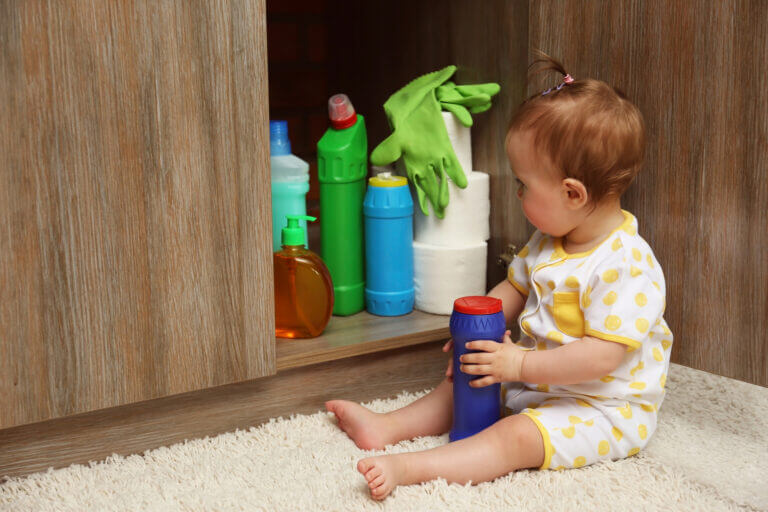
- Household Cleaning Products- Many cleaning and laundry products are poisonous. Children are attracted to them because of their bright colors and can confuse them with things like juice, candy, or toys. Single-use laundry packets, in particular, are very concentrated and toxic. Even a small amount of detergent can cause severe injury and death. Poison centers receive many calls each year about children getting into laundry detergent. Swallowing laundry detergent usually causes mild stomach upset or even no symptoms. However, children exposed to them can experience excessive vomiting, wheezing, and gasping. Some get very sleepy or even have trouble breathing. They can also cause irritation of the skin or eyes if touched. Keep these products in their original containers and store them out of children’s reach.

- Button Batteries- Small, shiny, and attractive to kids. Button batteries are found in most homes in some remotes, key fobs, and toys, but they can cause severe damage and even death if swallowed. Store extra batteries out of children’s reach. According to Utah Poison Control, a button battery can cause severe damage in as little as two hours after ingestion. Keep all devices that use button batteries out of reach of children, and make sure the battery compartments are tightly closed or even taped shut.

- Liquid Nicotine- Even a tiny amount of the liquid nicotine used to refill e-cigarettes can kill a child. Liquid nicotine is sold in many different flavors, many of which are appealing to young children. Keep these products out of a child’s reach.

- Carbon-monoxide Poisoning- Carbon monoxide is a gas that you cannot see, taste, or smell and because of this, it is often called the “invisible killer.” It is created when fuel-burning appliances, such as heating devices, grills, clothes dryers, and vehicles, do not burn all the fuel they need to function. Test CO alarms every month.Replace them according to the manufacturer’s instructions.
Utah Poison Control 24-Hour Service Call 1-800-222-1222
The Utah Poison Control Center (UPCC) is a 24-hour resource for poison information and educational resources. If you suspect poisoning, call the number listed above. If you have children, it is a good idea to put this number in your phone for easy and quick access. In the month of March, our Pediatric offices will have fridge magnets free to the public. Stop by and pick one up.
Things you will need to know when calling:
- The exact name of the product
- Amount ingested
- When the ingestion happened
- The age and weight of the person exposed
- How the person is doing
- Phone number where you can be reached
References:
- Center for Disease Control and Prevention: https://www.cdc.gov/safechild/poisoning/index.html
- Utah Poison Control: http://poisoncontrol.utah.edu/index.php#householddangers
- American Association of Poison Control Centers, 2018 Data Snapshot https://piper.filecamp.com/uniq/op8yK0HrOC738v8L.pdf
Fad Diets vs Real Nutrition
Canyon View Pediatrician – Richard Paxton, MD, and Wellness Expert – Lisie Byington talk about the differences between Fad Diets vs. Real Nutrition. The presentation was given in January 2019 in Springville, Utah, as part of the Community Health Seminar Series.
Skin Protection – More Fun in the Sun

Spring – a common time for sunburn
Spring is a wonderful time of year for many reasons. The days are getting longer, the winter illness season is coming to an end, and many outdoor activities are beckoning once again. However, it is also the time of year when many severe sunburns occur. There are several reasons for this:
- Many people’s skin is quite pale after the long winter, and more vulnerable to burn.
- The air is generally cooler than in the summer, so it is more difficult to feel when a burn is occurring.
- The sun is getting higher in the sky, so the rays are becoming more direct, and are therefore more likely to cause skin injury.
- Spring sports and yard work can abruptly increase the amount of time people spend outdoors.
- Some people are anxious to get tan after winter and try to do it all at once.
- While we associate many summer activities with the need for sun protection, spring activities often don’t trigger this thought.

Preventing sunburn is important
There are many health hazards associated with sunburn, the most serious of which is the aggressive form of skin cancer known as melanoma. Occasionally, this type of cancer is diagnosed in people in their teens. Exposure to the sun’s radiation increases the risk of genetic mutations in our skin cells which can lead to this dreaded condition.
But that’s not the only reason to avoid getting burned. These are true burns and can range in severity from superficial first degree burns with only mild discomfort, to deep second degree burns with blistering, extreme pain, and sometimes permanent skin changes. The younger a child is when sunburn occurs, the more severe the damage is likely to be.
Another concern with sunburn is the increased risk of other heat-related injuries. Someone with a severe sunburn is more likely to suffer heat exhaustion or heat stroke, which can lead to severe illness and even death. Occasionally, sunburns can affect a large enough portion of the body to cause the serious conditions associated with other significant burns, including susceptibility to infections and temperature regulation problems.

How to protect our children (and ourselves)
As with many things relating to our health, an ounce of prevention is worth a pound of cure. We should think about sun protection every day. Here are a few specifics that may help:
- Sun protective clothing and hats are usually the most effective means of preventing skin injury due to the sun, especially in infants and toddlers.
- Sunscreen, with an SPF of at least 30, is important to use on exposed skin.
- It should be applied about 20-30 minutes before sun exposure, sweating, or getting wet.
- Be sure to use enough. For an adult, this might mean up to 1-2 ounces per application.
- Reapply after getting wet, even if the sunscreen claims to be waterproof.
- Sunscreen can be used on babies, but the time spent in the sun should be very limited in this vulnerable population.
- Remember that sunscreen and insect repellent often don’t go well together, and may even inactivate each other. Read the labels carefully.
- Beware of reflected sun, whether from snow or water or even concrete, as this can greatly increase sun exposure, especially in young ones.
- Pay attention to the UV index, found on most weather reports and apps, to know when the sun will be most likely to cause harm.
- Avoid being outside between the hours of 10:00 AM and 3:00 PM as this is when the UV index is typically highest.
- Wear sunglasses which block 100% of the UVA and UVB rays, because eyes can get sunburned too.
- Avoid the use of tanning oils and creams as these do not block the sun’s harmful rays.
- Never use tanning beds, especially children and teens, as this direct exposure to harmful UV rays greatly increases the risk of the problems mentioned above.
As pediatricians, we strongly encourage outdoor activities because of the many health benefits they provide. Most adults, and many children, would do well to spend more time out of doors. We should also focus on doing so in a safe manner, so as not to cause unintended harm. By keeping these simple ideas about sun protection in mind, we can all better enjoy this wonderful spring season and the summer which is just around the corner.
Keeping “Heart Healthy”

February is appropriately named Heart Health Month. I often associate this month with Valentine’s and thoughts of love toward my wife and family. What better way to show your love for those closest to you than to do things to stay healthy?
Did you know that the number one cause of death in the United States is heart disease? What is your personal risk for heart attack? You can find out how likely you are to have a heart attack in the next 10 years by going to http://www.cvriskcalculator.com/ with these three numbers: 1) your total cholesterol, 2) your good HDL cholesterol, and 3) your blood pressure. With this information, you can easily do the calculation yourself. If you don’t know these numbers and have had these tests done, you are able to access your results via your patient portal. If you don’t remember how to access your patient portal, call our office. We can help to get you access or give you results from a previous test. If you haven’t had these tests recently, visit your doctor right away to get tested.

The recommended goal is to have a risk factor under 7.5%. If you have a percentage above that, it is recommended that you intervene with medication and/or changes in lifestyle and diet.
Here are ways to reduce your risk of a heart attack:
- Controlling blood pressure: The goal is to be under 140/90. Controlling blood pressure is a great way to prevent heart attacks and strokes.
- Control your cholesterol: Finding out what your cholesterol numbers are is the first step. The next thing is to act on those numbers.
- Don’t smoke: Smoking dramatically increases your risk for heart attack and stroke. Smoking is also a leading cause of cancer.
- Diabetes: Controlling weight and increasing exercise are the best ways to prevent diabetes. Diabetes doubles your risk for heart attack, and experts recommend that everyone that has diabetes be on a statin.
- Exercise regularly: The goal is to have at least 150 minutes of exercise each week. Not only do you reduce your risk of heart attack and stroke, but you also improve your physical and mental well-being.
Other general ways to improve your health include:
- Adequate sleep: The recommended amount is 7-9 hours per night.
- Don’t smoke: If you want to stop smoking, the state of Utah provides a free cessation program with counseling. You can reach them at 1-800-Quit-Now.
- Manage stress: Stress is linked to heart disease because it raises your blood pressure. Stress can even be a “trigger” to heart attacks. Positive ways to manage stress can be exercising, journaling, meditating, drawing, and listening to music. Find something you enjoy that brings you peace and stick with that!
- Have a healthy diet: What we put in our bodies has a major effect on our heart health. Try to eat plenty of fresh fruits, vegetables, whole grains, limit alcohol, and drink plenty of water. Keeping processed foods to a minimum will make your heart happier in the long run.
- Maintain a healthy weight: Being overweight or obese can increase your risk for heart disease because of other heart-related factors like high blood pressure, diabetes, and high cholesterol. Implementing a healthy diet with a moderate exercise schedule can greatly reduce your risk of becoming overweight or obese. Try to have a body mass index between 20 to 25. If you are curious as to what your BMI is, click on the link for a BMI calculator: https://www.nhlbi.nih.gov/health/educational/lose_wt/BMI/bmicalc.htm
During February show your love for your family and yourself by keeping “heart-healthy.”
The Dreaded Pap Smear – Why It’s Important.

There are fewer preventative visits a woman detests more than the dreaded Pap smear (a close second is most likely a mammogram, and third would likely be that “puff of air” into your eyes). So, you are in good company when you groan after remembering today is “that wellness visit.” With that said, let’s discuss why we put you through this emotional and physical discomfort.
First, we want to catch any concerns early. Generally, it is easier to treat illness in the early stages, instead of waiting until it is widespread. Some of you may remember when it was recommended that we did annual Pap smears. If you remember those, you are probably wondering if my previous statement is contradictory to our screenings. Surprisingly, it is not. When we did yearly Pap smears, we found we did a lot of unnecessary testing for false positives. (That means you test positive for something concerning, but upon further examination, we find out it was nothing.) Sometimes the body can clear abnormal cells and viruses when given time, hence the birth of our newer guidelines.
Now, what are we looking for with Pap smears? Besides being able to literally look for any abnormalities, we take samples of cells from the cervix looking for two major things. First, abnormal cells (aka cancer). Like I said, some cells we just monitor. With these results, we may do nothing. We may choose to repeat the test in one year to monitor if the body has cleared these out without intervention, or we may need to do further testing. Your provider will be able to explain why they go in one direction or the other. Second, we are also looking for HPV (Human Papillomavirus). HPV has several different strains, but there are some linked to cervical cancer. If you test positive for high-risk HPV, most likely, we will encourage further testing. Again, let’s catch and treat it early.

Finally, what are the guidelines? For normal Pap smears, women between 21-30 years old are recommended to have a Pap smear every three years, despite what age they became sexually active. For women who are in a committed, monogamous relationship, and have low-risk factors, we recommend a Pap smear every three to five years. For those 30-65, we recommend having a PAP/HPV test every five years.
Just remember, every woman dreads “Pap Smear Day.” However, no one ever regrets catching and treating problems early.
Coronavirus – Is it a concern?
You have likely seen the news about coronavirus and China. We want to reassure our patients about this because we have been receiving a lot of calls with questions regarding this issue.
Basic Information
2019 Novel Coronavirus (2019-nCoV) is a virus identified as the cause of an outbreak of respiratory illness first detected in Wuhan, China. Chinese authorities identified the new coronavirus very recently, and this new strain has now been found in thousands of patients in China. Additional cases have been identified in a growing number of other international locations, including the United States. There are ongoing investigations to learn more.

In the United States
The fact that this virus has caused severe illness and has spread from person-to-person in China is concerning, but it’s unclear how the situation in the United States will unfold at this time. Imported cases of 2019-nCoV infection in people have been detected in the U.S., but at this time, this virus is NOT currently spreading in the community in the United States. To see a map of where these infections have been confirmed in the United States, click here (https://www.cdc.gov/coronavirus/2019-ncov/cases-in-us.html).
It’s important to note that “person-to-person spread” is different for different viruses. Some viruses are highly contagious (like measles), while other viruses are much less contagious and thus harder to spread. While the US Centers for Disease Control (CDC) considers this is a very serious public health threat, based on current information, the immediate health risk from 2019-nCoV to the general American public is deemed to be low at this time.
Symptoms
For confirmed 2019-nCoV infections, reported illnesses have ranged from people being mildly sick to people being severely ill and dying. The CDC believes at this time that symptoms of 2019-nCoV may appear in as few as 2 days or as long as 14 days after exposure. Symptoms can include:
- Fever
- Cough
- Shortness of breath
Keep in mind that these same symptoms can be caused by many other illnesses and do not necessarily indicate you have coronavirus.
Prevention
There is currently no vaccine to prevent 2019-nCoV infection. The CDC always recommends everyday preventive actions to help prevent the spread of respiratory viruses, including:
- Cover your mouth and nose with a tissue when you cough or sneeze, or you can cough or sneeze into your sleeve. Try not to cough into your hands.
- Wash your hands often with soap and water for at least 20 seconds. Use an alcohol-based hand sanitizer that contains at least 60% alcohol if soap and water are not available.
- Avoid touching your eyes, nose, and mouth with unwashed hands.
- Avoid close contact with people who are sick.
- Stay home when you are sick.
- Clean and disinfect frequently touched objects and surfaces.
Treatment
There are no specific treatments for illnesses caused by human coronaviruses. Most people with common human coronavirus illness will recover without treatment. However, you can do some things to relieve your symptoms:
- Take pain and fever medications (Caution: do not give Aspirin to children).
- Use a room humidifier or take a hot shower to help ease a sore throat and cough.
- If you are mildly sick: drink plenty of liquids, stay home, and rest.
More Information
For the latest information on this developing issue, we recommend you check out the CDC or Utah Department of Health’s websites.
CDC – https://www.cdc.gov/coronavirus/2019-ncov/index.html
Utah Department of Health – https://health.utah.gov/coronavirus
If you have recently traveled to China or are concerned you may be infected; please call one of our offices to schedule an appointment with one of our providers. When you make an appointment, let us know you have been in China so that when you arrive we can get you back to a private exam room as quickly as possible. For details on locations and contact information visit www.CanyonViewMedical.com.
Every Day Strong – Combating Anxiety and Depression by Building Resilience

Every other year children in Utah schools are given a survey that asks: During the past 12 months, did you ever feel so sad or hopeless almost every day for two weeks or more in a row that you stopped doing some usual activities? In 2011, 13% of youth responded yes, but when the survey was repeated in 2017 that number had risen to 25%. (Utah County Student Health and Risk Protection (SHARP) survey data.)
While not all of these children who answered yes would meet the criteria needed to diagnose a Depression or an Anxiety Disorder, this trend illustrates the increasing challenge our children are facing. Frequently I’m asked if the causes of this increase are known. While there are many theories about contributing factors, such as the use of smartphones, living at elevation, changes in family structure, helicopter parenting, and social media, none of them fully capture what is going on, and more importantly, they do not provide any guidance on what parents should do for those kids who are suffering.
To address this, the United Way created a program called Everyday Strong, which focuses on building resilience in kids to help them combat anxiety and depression. This is achieved by focusing on our physical needs, our need for safety and our need for connection, which when met, allows us to feel confident and hopefully thrive in life.
Below is a brief discussion of these concepts, but for more details and ideas you can read through the EveryDay Strong Handbook, attend a live presentation, or watch a recorded presentation here.
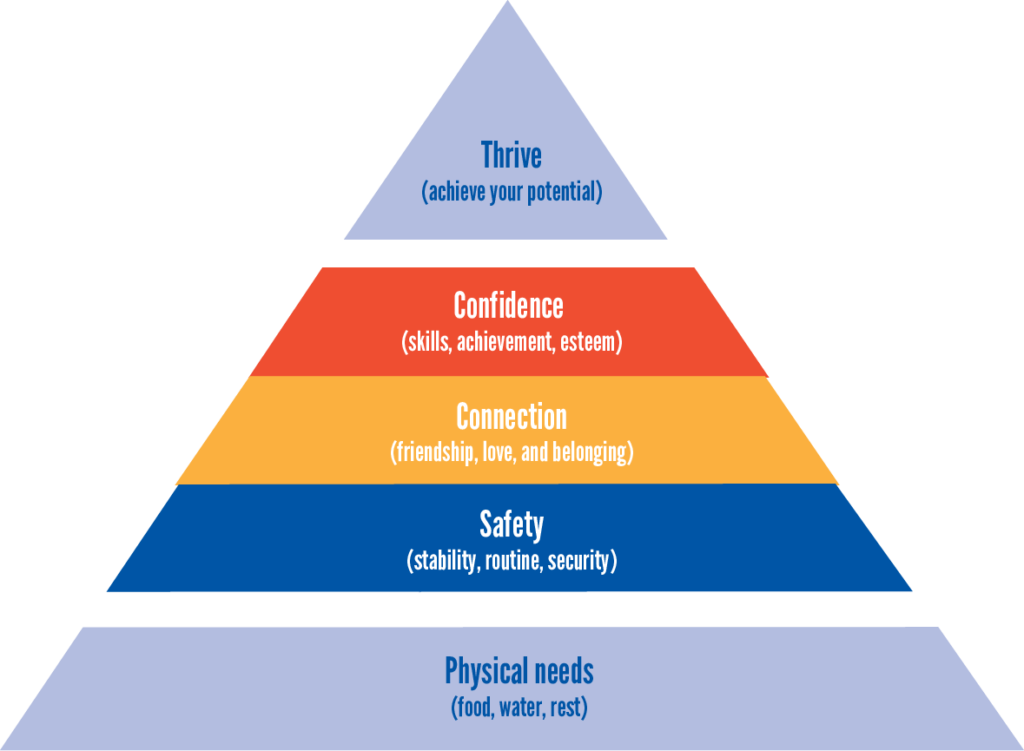
At the most basic level, we all have physical needs that must be met. Examples include sleep, food, water and rest. We all know that person who becomes “Hangry”, but once you give them a little food, they return to a more productive version of themselves. When I was on Active Duty in the Navy, I learned that when marines, soldiers, sailors or airmen had experienced combat stress, the most effective intervention is “3 Hots and a Cot”, or in other words three hot meals, a chance to get good sleep, with a plan to return to their unit as soon as possible.
Once our most basic needs are met, we need a place to feel both physically and emotionally safe. As parents, we can focus on creating an environment where it is safe to talk, safe to feel emotions, safe to explore, and safe to fail. Because even if a child is safe, they may not feel it. It’s better to listen more than you speak while withholding judgment about what they are feeling and discuss failure as a chance to grow. This is easy to say, but much harder to do.
As you strive to create a safe environment, this should lead to opportunities for you to connect with your child. One of the most common complaints of teens experiencing anxiety and depression is feeling alone even when they are surrounded by people. You can connect by playing together, laughing together, learning about their interests even if you think they are boring, and apologizing to your child when you’ve done something wrong. Sometimes this is easy when you and your child share similar interests, but other times it is a real stretch. For example, what if they love playing the video game Fortnite or enjoy being in theatre, (things that don’t necessarily appeal to you)? Taking time to learn the basics, even making a fool of yourself by participating can go a long way to making that connection. Every child is unique and taking time to find that uniqueness is what brings about connection.

Ultimately, it is impossible to make someone else feel confident, but there are things you can do to encourage your child to find confidence. Some examples include trusting your child’s ability to solve problems, role-playing solutions, and remember when they have been successful. One specific tool that can help when dealing with Anxiety and Depression is naming the problem the child is facing. If every time a child is about to go to school they get overwhelmed worrying about all the things that can go wrong, you can start a conversation that what they are feeling is Anxiety. At times, giving this feeling of anxiety a specific name such as the “Bossy Pants” or “Stinky Head” helps externalize what they are feeling and allows them to get back in charge.
As you meet a child’s basic needs, help them feel safe, create meaningful connections, and build confidence, your child will have an opportunity to thrive.
The information provided by the United Way is not meant to replace professional mental health care. If you feel like your child’s needs surpass the given advice, please make an appointment with one of the Pediatricians at Canyon View Pediatrics.
https://www.unitedwayuc.org/images/pdfs-doc/UnitedWay_ResilienceHandBook_Web.pdf